

Roofing a Victorian Home: Keep the Slate Look, Lose the Slate Headaches
Roofing a Victorian Home: Keep the Slate Look, Lose the Slate Headaches
Part of our series on roofing America's classic home styles.
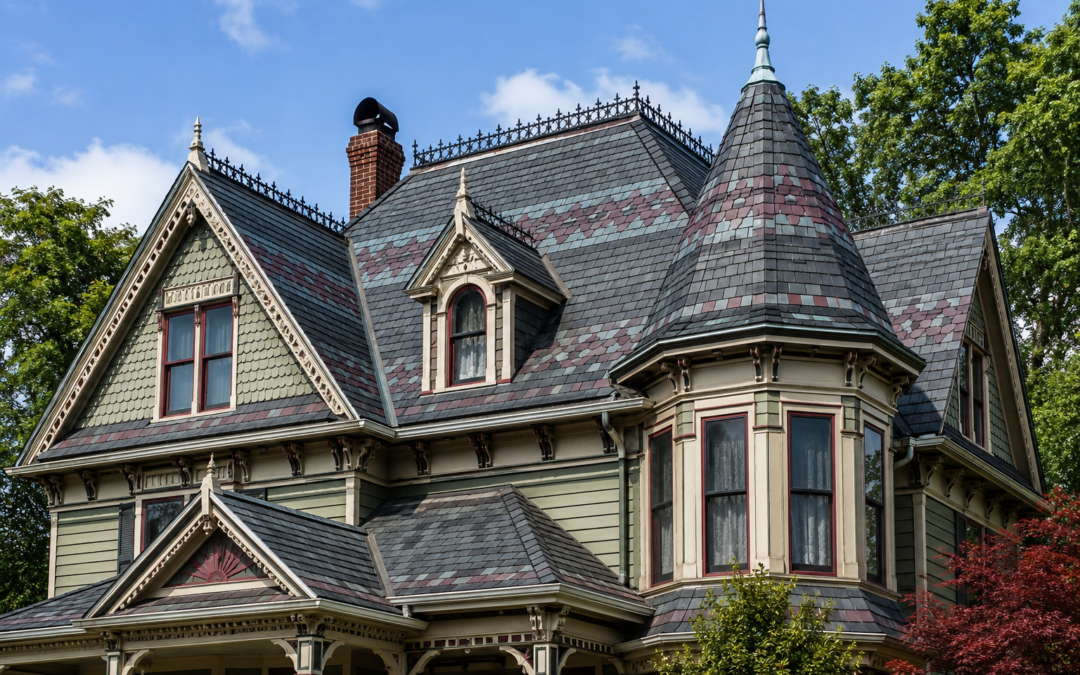
A Victorian roofline is the most expressive part of the house. Steep gables, a corner turret, patterned slate laid in bands of color, iron cresting along the ridge, the roof is where 19th-century builders showed off. It's also, more often than not, the part of the house giving its current owner the most trouble.
If you own a Victorian in the Lafayette area, you already know the feeling: the architecture is irreplaceable, but the original roof is on borrowed time. The good news is that you no longer have to choose between protecting your home and preserving its character. Composite slate has changed that math entirely.
The problem with an aging Victorian roof
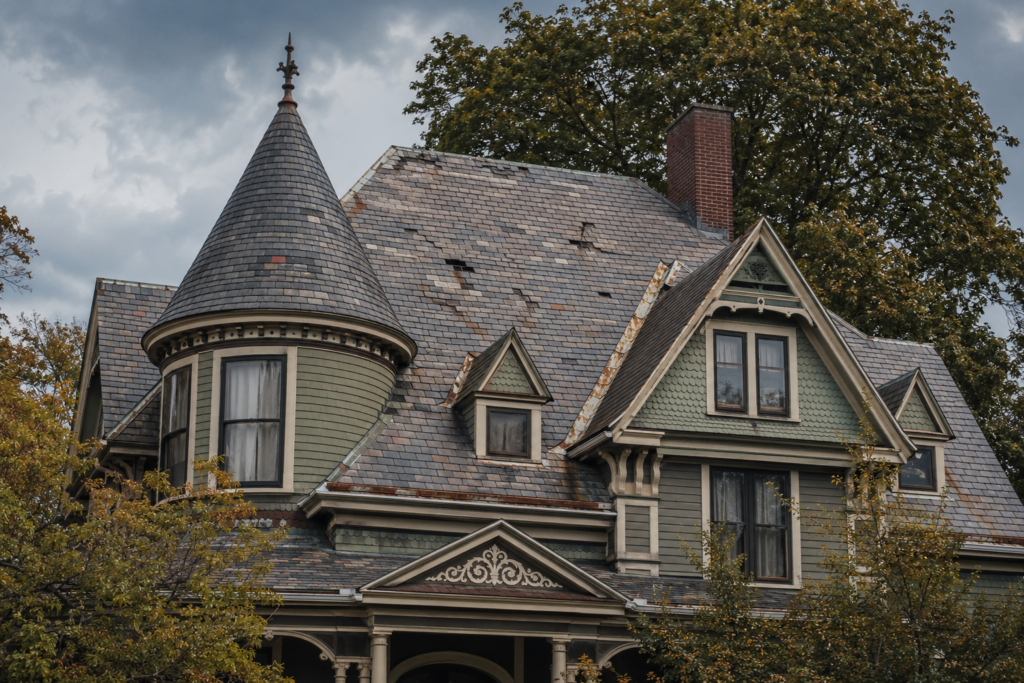
Most Victorian homes were built between the 1860s and the early 1900s, and the prestige roof of that era was natural slate. Real slate is genuinely beautiful and can last a very long time, but the homes wearing it now are well over a century old, and that brings a stack of problems that tend to arrive all at once.
The slate itself may still look fine while everything around it fails. The nails rust and lose their grip (roofers call it "nail sickness"), the underlayment crumbles, and the flashing in all those valleys and dormers gives out. Individual tiles crack and slide off. On a roofline as complex as a Victorian's — multiple pitches, towers, dormers, and tight valleys, there are simply more places for water to get in.
Then there's the cost of doing it "right" the traditional way. Genuine slate is expensive to buy, and the skilled craftspeople who can install it correctly are increasingly rare and pricey. Slate is also extremely heavy and brittle: a natural slate roof can weigh several times as much as an asphalt or composite roof, which is a real concern on an older structure, and the material cracks underfoot, making every future repair a delicate, costly job. Matching the original color and pattern decades later is its own headache, since old slate quarries have closed and shades have drifted.
Faced with all that, many owners make a decision they regret: they re-roof with asphalt shingles. It's cheaper up front, but it flattens the house's character, looks out of place on a steep Victorian roof, and can quietly undermine the property's value and curb appeal. The roof that was once the crown of the home becomes the thing people notice for the wrong reasons.
A better option: Brava Old World Slate
This is where composite slate solves the problem instead of forcing a compromise. Brava's Old World Slate is a synthetic tile molded from real slate, so it carries the authentic texture, edges, and depth of the genuine article, close enough that from the street, it reads as the real thing. But it sidesteps nearly everything that makes natural slate impractical on an old home.
It's a fraction of the weight. Because Brava is so much lighter than natural slate, most homes can take it without the structural reinforcement a real re-slating might demand, a meaningful advantage on a century-old frame, and often on homes whose original roof wasn't even slate to begin with.
It's built to last and backed by a written warranty. Brava Old World Slate carries a 50-year limited warranty, comes in fire-rated assemblies, and is engineered to resist impact and high winds, the kind of hail and storm punishment Indiana hands out every spring. It won't rot, curl, or shed the way aging materials do.
It matches the look you're trying to protect. One of the best features for a Victorian is custom color. Many of these homes originally wore polychrome slate patterns and bands in several colors. Brava can be blended to custom colors, and the color runs through the full thickness of every tile, so it holds its look over time instead of fading off the surface. That makes it possible to honor the original design rather than settle for a flat, single-color roof.
It doesn't require a vanishing trade. A composite slate roof can be installed by a qualified roofing crew using standard methods, so you're not hunting for one of the few remaining slate specialists or paying a premium for the privilege. Future repairs are simpler and less fragile, too.
Add it up, and you get the part most Victorian owners care about most: the home keeps its soul, and you stop pouring money into a roof that was always going to fail again.
One honest note about historic districts
If your home sits in a designated historic district or is on a historic registry, there may be a review process before you re-roof, and some preservation boards have rules regarding the use of authentic materials. That doesn't necessarily rule out composite slate; many boards accept it, and synthetic slate has become a widely respected choice for character homes, but it's worth confirming the requirements in your specific district before you commit. We're glad to help you figure out where your property stands in the conversation.
Why the installer matters as much as the material
A premium roof installed poorly is still a poor roof, and on a Victorian, the details are everything. The flashing around a turret, the way courses wrap a dormer, the alignment across changing pitches: those are where a roof succeeds or fails. As a certified Brava installer, Wabash Valley Exteriors is trained to install Brava in accordance with the manufacturer's specifications, which also keeps your 50-year warranty valid. We're a family-owned company that has served Lafayette, West Lafayette, and the surrounding Tippecanoe County area since 2017, and we also handle storm damage and insurance claims.
If you own a Victorian and you've been quietly dreading the roof, you have a real option now, one that protects both the house and your investment in it.
Ready to see what it would look like on your home? Request a free, no-obligation estimate or call (765) 838-0882. We'll inspect your roof, talk through your options, and show you how Brava can keep your Victorian looking like itself for the next fifty years.