

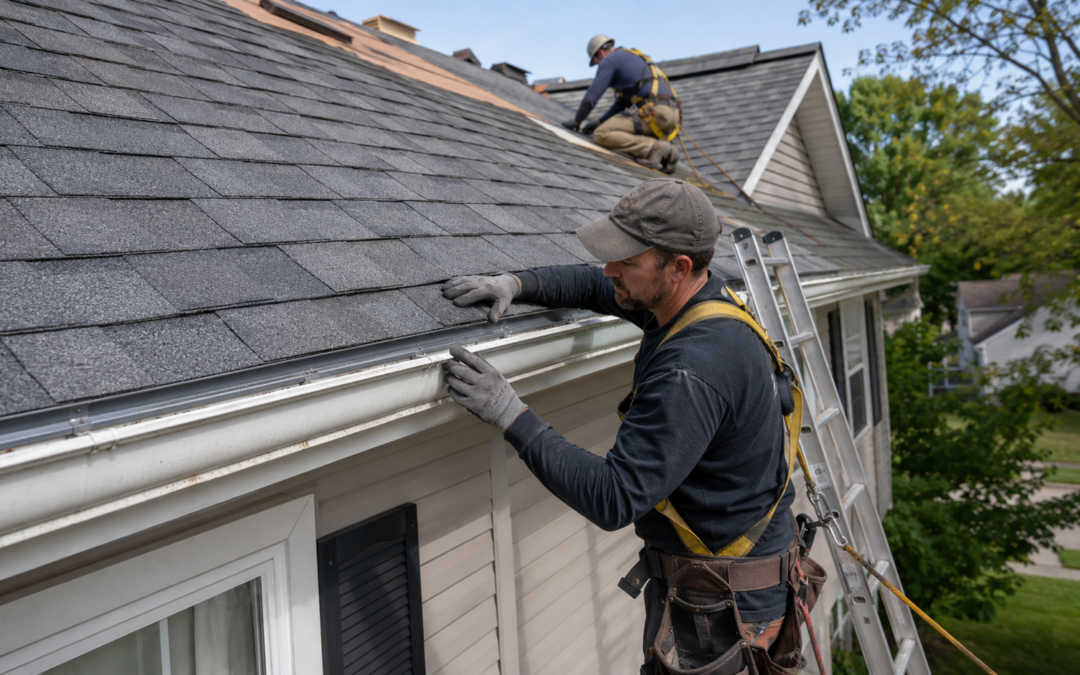
Do You Need New Gutters When Replacing Your Roof?
No, you do not automatically need new gutters when you replace your roof. If the gutters are correctly sized, securely attached, properly pitched, and free of significant damage, a roofing crew may be able to protect them and leave them in place.
Replacing both systems at the same time can still be the better decision when the gutters are failing, the fascia needs repair, or the roof project changes the drip-edge and drainage details. The answer should come from an inspection, not a package price.
When existing gutters can stay
Gutters may remain if they are structurally sound and doing their job. That generally means water flows toward the downspouts, seams are not leaking, hangers are secure, and the system is not pulling away from the fascia.
The roofing contractor also needs enough access to install the roof edge, underlayment, drip edge, and flashing correctly without damaging the gutter. Some systems can stay in place throughout the job. Others may need to be loosened or temporarily removed.
Signs replacement should be considered:
- Sections sag, pull away, or hold standing water.
- Seams or end caps leak repeatedly after repairs.
- Rust, cracks, holes, or crushed areas are visible.
- Water regularly spills over the edge during ordinary rain.
- Downspouts discharge next to the foundation or cannot handle the roof area.
- The fascia behind the gutter is soft, rotted, or damaged.
- The gutter profile or color will not work with the new exterior plan.
Overflow is not always proof that the gutters are too small. Leaves, shingle granules, poor pitch, a blocked downspout, or a drainage problem at one roof valley can create the same symptom. The inspection should identify the cause.
Why the roof edge matters
A roof and gutter are separate components, but they meet at one of the most important water-control details on the house. Roofing materials must direct water to the edge. A drip edge helps guide that water away from vulnerable wood and into the gutter. The gutter then carries it to a downspout and away from the foundation.
If those parts are installed without coordinating their position, water can run behind the gutter, stain the fascia, or collect where it should not. A combined project gives the contractor a chance to inspect the whole path from roof surface to ground discharge.
Which should be installed first?
In many replacement projects, the roof work is completed before new gutters are installed. That gives the roofing crew clear access to the roof edge and prevents new gutters from being scratched or bent during tear-off.
The exact sequence depends on the home, fascia condition, gutter type, and scope. What matters is that the roofing and gutter details are planned together before either crew begins.
Questions to include in the estimate
- Will the existing gutters stay in place, be removed temporarily, or be replaced?
- Who is responsible if an existing gutter is damaged during roof work?
- Does the fascia need repair before gutters are attached?
- Are drip edge and roof-to-gutter transitions included?
- Are the downspouts large enough and routed away from the foundation?
- Will high-volume roof valleys need a different drainage detail?
- One project can reduce duplicated work
If both the roof and gutters are near the end of their service lives, completing them together can reduce repeated setup and make it easier to coordinate colors, fascia repairs, roof-edge details, and drainage. That does not mean every homeowner should replace both. It means both should be evaluated before the roof scope is finalized.
Wabash Valley Exteriors installs residential roofing, gutters, and downspouts throughout Lafayette, West Lafayette, and surrounding communities. Call (765) 838-0882 for an inspection and a written recommendation for the roof, gutter system, and fascia.
Frequently asked questions
Will roof replacement damage my existing gutters?
A careful crew can often protect sound gutters, but the risk depends on roof access, tear-off, gutter condition, and how the system is attached. The estimate should explain the plan.
Can gutters be replaced after the new roof is finished?
Yes. That is a common sequence because the roof edge can be completed before the new gutter is installed.
Why does water run behind my gutters?
Possible causes include failed drip-edge details, loose gutters, poor pitch, fascia damage, or water overshooting at a roof valley. An inspection is needed to find the actual path.
Wabash Valley Exteriors serves Lafayette, West Lafayette, and surrounding communities with residential roof inspections, repairs, and replacements. Call (765) 838-0882 or request a free estimate to find out whether your roof should be repaired now, replaced this summer, or monitored for a later project.