

Roof Leak After a Summer Storm in Lafayette: What to Do First
When water starts dripping after a summer storm, the first job is not to diagnose the roof from the driveway. It is to keep people safe, limit interior damage, and document what happened. The source of a roof leak is often several feet away from the spot showing on the ceiling, so guessing can waste time and create more risk.
Use this order of operations for a Lafayette-area home after heavy rain, hail, or strong wind.
1. Keep people away from electrical hazards
If water is near a light fixture, outlet, ceiling fan, appliance, or electrical panel, keep everyone away from the area. Do not touch wet electrical equipment. If you can shut off the correct circuit safely from a dry location, do so. If you are unsure, contact an electrician or emergency service.
A bulging ceiling may be holding trapped water. Keep children and pets out of the room because wet drywall can release without warning.
2. Limit the interior damage
Move furniture, electronics, rugs, and valuables out of the wet area.
Place buckets or plastic containers under active drips.
Use towels or plastic sheeting to protect flooring when it is safe to do so.
Photograph the ceiling, walls, flooring, and damaged belongings before moving or discarding them.
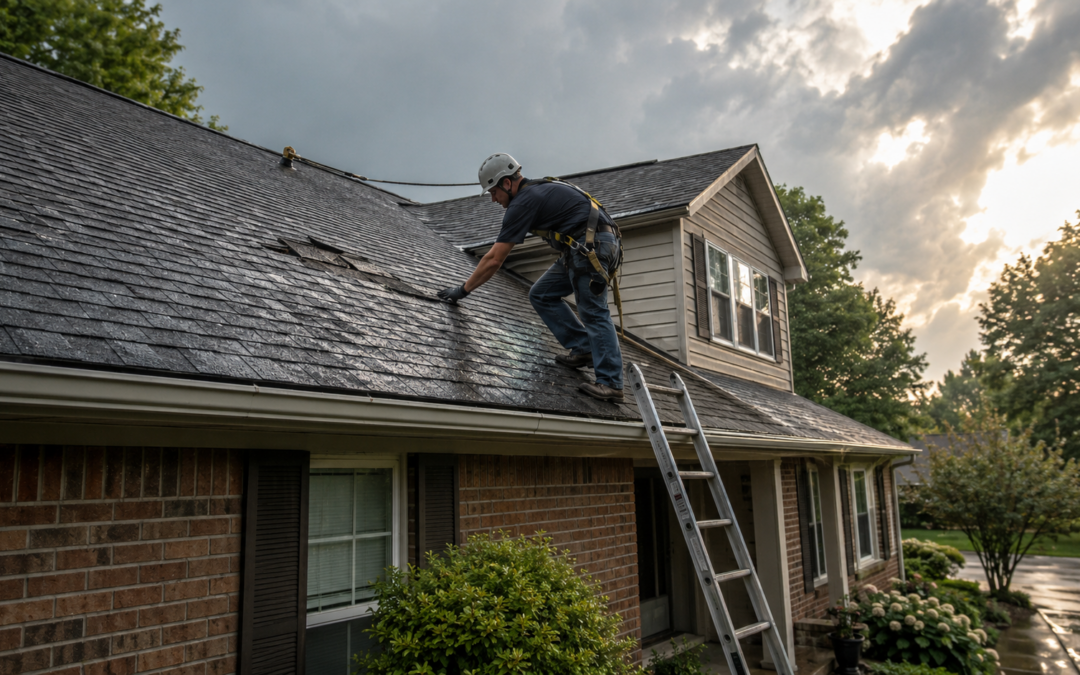
Do not climb onto a wet roof. Wet shingles, wind, hidden damage, and loose debris make a post-storm roof especially dangerous.
3. Record the storm and visible damage
Take clear photos and short videos from the ground. Record the date and approximate time of the storm, when the leak first appeared, and which rooms were affected. If you can safely see missing shingles, displaced flashing, fallen branches, damaged gutters, or siding dents, include those in the record.
Save receipts for emergency work, temporary protection, cleanup, and damaged items. Documentation helps the roofing contractor understand the event and may be useful if you contact your insurance company.
4. Call a local roofing contractor for an inspection
A storm inspection should look beyond the visible ceiling stain. Water may enter through missing or lifted shingles, flashing around a chimney or wall, a roof vent, a valley, or damage created by debris. The contractor should also check the roof deck, attic, gutters, downspouts, and exterior components connected to the affected area.
Ask for photographs and a written explanation of what was found. You need to know whether the problem is an isolated repair, widespread storm damage, or normal aging that happened to show itself during the rain.
5. Contact your insurer when the damage may be covered
Homeowners insurance policies and deductibles vary. The contractor can document physical damage, but the insurance carrier decides coverage. If storm damage appears significant, notify the carrier promptly and follow its instructions before making permanent repairs that could remove evidence.
Emergency steps to prevent additional damage may still be necessary. Keep photographs, estimates, invoices, and receipts, and ask the insurer what it wants documented.
6. Use temporary protection only as a bridge
A tarp or temporary seal may keep more rain out until permanent work can be scheduled. It is not a finished repair. Temporary materials can loosen, trap water, or hide a larger problem if they remain in place too long.
Have temporary protection installed by someone equipped to work safely on the roof. Then get the permanent scope and schedule in writing.
Repair or replacement?
A focused repair may make sense when the damage is limited and the surrounding roof is still in good condition. Replacement becomes more likely when damage is widespread, the roof already has several problem areas, matching materials are unavailable, or the roof is near the end of its useful life.
Do not let urgency force an uninformed decision. A same-day signature from a door-to-door salesperson is not the same thing as a careful inspection and documented scope.
Get the leak inspected before the next storm
Summer weather can send several storms through the Wabash Valley in a short period. A stain that dries after one storm can return larger after the next.
Wabash Valley Exteriors provides roof leak and storm damage inspections in Lafayette, West Lafayette, and surrounding communities. Call (765) 838-0882 to request help and ask what temporary steps are appropriate for your home.
Frequently asked questions
Can I tell where the roof is leaking by looking at the ceiling stain?
Not reliably. Water can travel along decking, framing, insulation, or wiring before it appears inside. The entry point may be away from the visible stain.
Should I call the roofer or insurance company first?
If there is an emergency, protect people and prevent additional damage first. A roofing inspection can document the physical condition, while your insurer explains policy requirements and determines coverage.
Is a roof tarp a permanent repair?
No. A tarp is temporary protection intended to limit additional water entry until a proper repair can be completed.
Wabash Valley Exteriors serves Lafayette, West Lafayette, and surrounding communities with residential roof inspections, repairs, and replacements. Call (765) 838-0882 or request a free estimate to find out whether your roof should be repaired now, replaced this summer, or monitored for a later project.