
Roofing a Craftsman Bungalow: The Cedar Shake Look, Without the Upkeep
Roofing a Craftsman Bungalow: The Cedar Shake Look, Without the Upkeep
Part of our series on roofing America's classic home styles.
The charm of a Craftsman bungalow is in its honesty. Low, hugging rooflines. Wide eaves with exposed rafter tails. Hand-finished details that show the work of the people who built it. And up top, a textured shake roof that ties the whole look together. The Arts and Crafts movement that gave us these homes was a reaction against cheap, machine-made sameness, so when a bungalow's roof goes wrong, it tends to go very wrong for the house's character.
If you own a Craftsman or bungalow in the Lafayette area, the roof is doing more work than you might think. Because of those wide overhangs and the low pitch, the roof is highly visible from the street; it's a big part of what makes the house read as a bungalow at all. Which is exactly why the material you put up there matters so much.
The problem with an aging bungalow roof
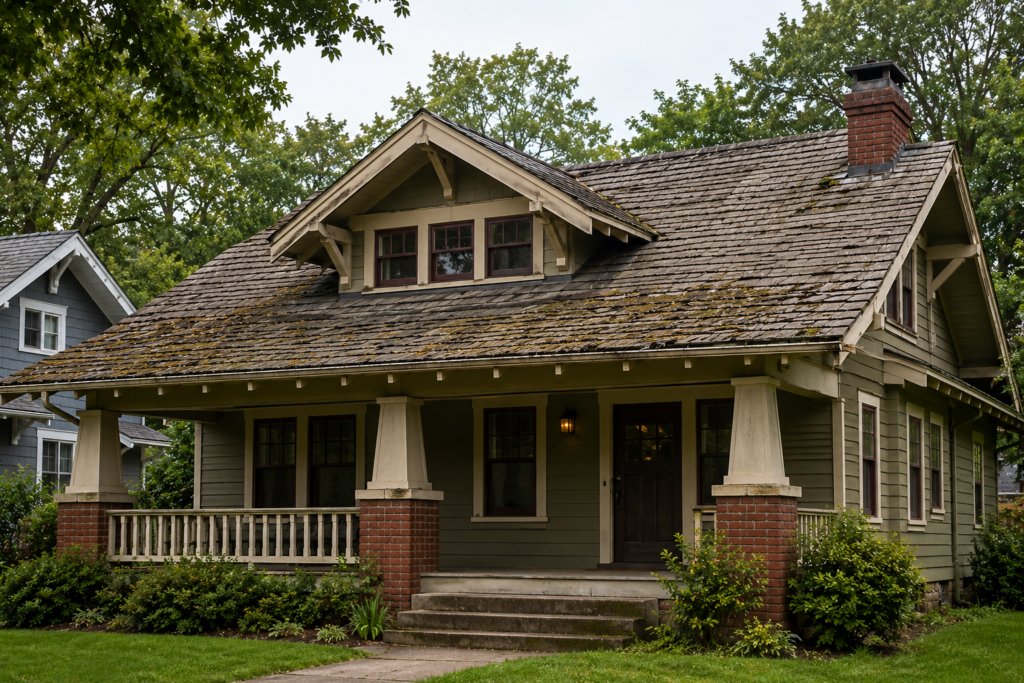
Most of these homes were built between about 1905 and 1930, and many originally wore wood shingles or hand-split cedar shakes. Real cedar is beautiful when it's new. The trouble is what time does to it.
Wood shake is a living material, and it ages like one. It absorbs moisture, then dries out, so over the years it splits, curls, and cups. In a shaded or humid spot, it grows moss and algae that retain water against the wood, accelerating rot. It attracts insects. And keeping it alive is an ongoing job — periodic cleaning, treating, and staining, plus replacing the shakes that fail early. Even a well-cared-for cedar roof has a limited life and will be back on your to-do list sooner than you'd like.
There's also a safety issue that's easy to overlook: real wood shake burns. It's a combustible roof covering, which is part of why so many were replaced over the decades and why some areas restrict it.
Faced with all that maintenance, many bungalow owners did the understandable thing and re-roofed with plain asphalt shingles. It solved the upkeep problem and created a new one: a flat, generic roof that drains the warmth right out of the house. On a style defined by texture and craft, a smooth asphalt roof looks wrong, and it quietly takes the curb appeal and some of the value with it.
A better option: Brava Cedar Shake
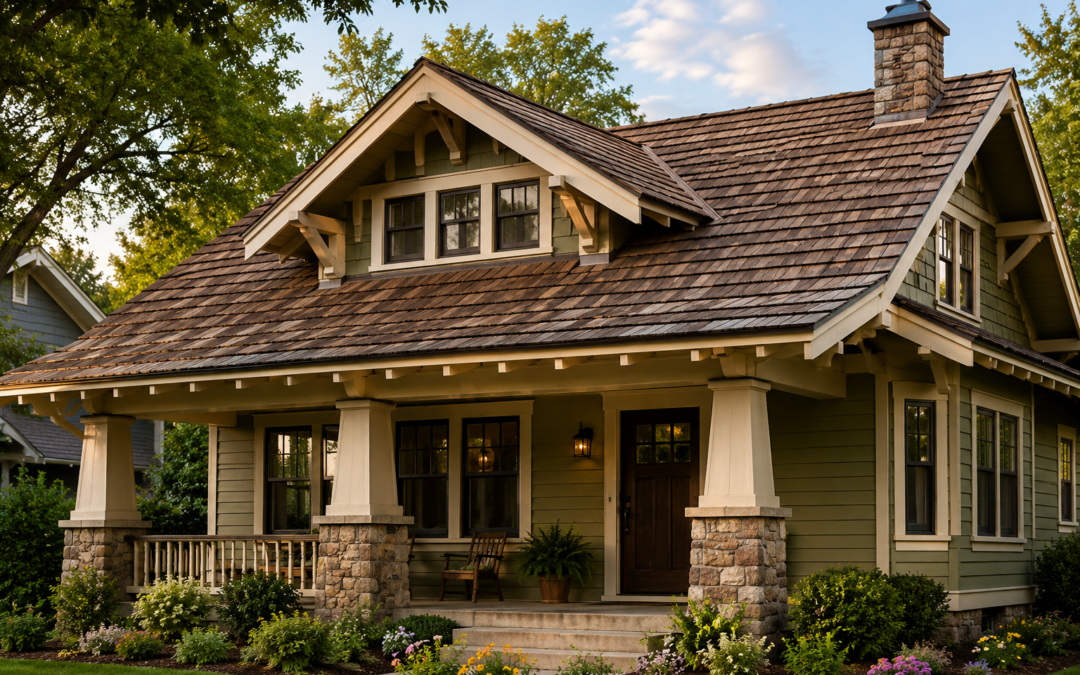
This is where composite shake changes the equation. Brava's Cedar Shake is a synthetic tile molded from real hand-split cedar, so it retains the deep grain, irregular edges, and shadow lines that make a shake roof look handcrafted. From the street, it reads as the real thing. But it leaves Cedar's problems behind.
It never rots, splits, or curls. Brava won't absorb water, grow moss, feed insects, or dry out and crack. The roof that looks like weathered cedar simply stays that way: no staining, no sealing, no annual upkeep.
It's far safer and tougher. Brava Cedar Shake is available in Class A fire-rated assemblies, a serious upgrade over real wood, which burns, and it's engineered to resist impact and high winds, including the hail and storm punishment Indiana hands out every spring. It carries a 50-year limited warranty, whereas a well-maintained cedar roof might last a couple of decades.
It keeps the natural, varied look. Real shake gets its character from its irregularity, and Brava is made to match it. It comes in varied widths and a hand-split profile for an authentic, staggered roofline, and because it can be blended to custom colors with the color cast through the full thickness of each tile, you can dial in the warm browns or weathered grays that suit a Craftsman palette, and it won't fade off the surface over time.
It's lighter and simpler to install. Brava is lightweight, so most homes require no structural changes to support it, and a qualified roofing crew can install it using standard methods. You're not paying a premium for a specialty material that needs babysitting later.
Add it up, and you get what bungalow owners actually want: the warm, textured, honest look the house was designed around and a roof you can stop worrying about.
Why does it fit the Craftsman style so well?
There's a nice irony here. The Arts and Crafts movement prized honest, durable materials and quality that lasts. A composite shake that delivers the authentic cedar look while actually standing the test of time is arguably more in the spirit of the style than a real cedar roof that needs constant rescue. And because a bungalow puts its roof on full display, those wide eaves leave nowhere to hide the depth and shadow of Brava's shake profile, which pays off exactly where people are looking.
If your home sits in a designated historic district, it's worth confirming any local rules about roofing materials before you commit; many boards accept high-quality synthetic shake. It's a quick thing to check, and we're glad to help you figure out where your property stands.
Why the installer matters as much as the material
Your bungalow was built to last and built with care. Its roof can be, too.
Ready to see Brava Cedar Shake on your home? Request a free, no-obligation estimate or call (765) 838-0882. We'll inspect your roof, walk through the options, and show you how to keep your Craftsman looking the way it was meant to—for the next fifty years.