
Roofing a Spanish or Mediterranean Home: Barrel Tile Built for Indiana Winters
Roofing a Spanish or Mediterranean Home: Barrel Tile Built for Indiana Winters
Part of our series on roofing America's classic home styles.
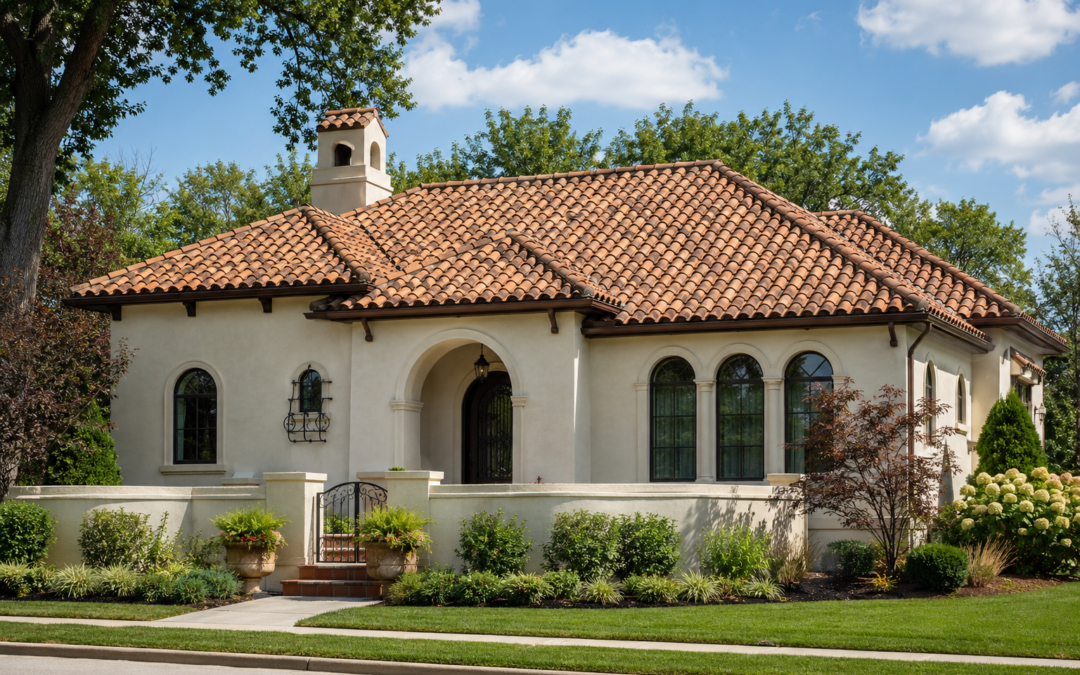
There's no mistaking a Spanish or Mediterranean home, and the roof is the reason. Those warm terracotta barrel tiles, the rolling S-curves that throw soft shadows across a low-pitched roofline, are the single most recognizable feature of the style. Stucco walls, arched windows, and wrought iron all play their part, but it's the barrel-tile roof that says Spanish Revival from a block away.
If you own a Mediterranean-style home in the Lafayette area, or you're building one, you already know the look you want. What you may not know is that the traditional way of getting it, real clay barrel tile, runs into a problem here that it never faces in California or Arizona: our winters.
The problem with a traditional barrel-tile roof
Authentic clay and concrete barrel tile is genuinely beautiful and, in a warm, dry climate, can last a very long time. In the Midwest, it brings a stack of issues that are easy to underestimate.
Start with weight. Clay and concrete barrel tiles are among the heaviest roofing materials, far heavier than asphalt or composite, and that weight often requires extra structural support. On an existing home, that can mean reinforcing the framing before you can even put the roof on. On a new build, it means more structure (and more cost) just to carry the roof you want.
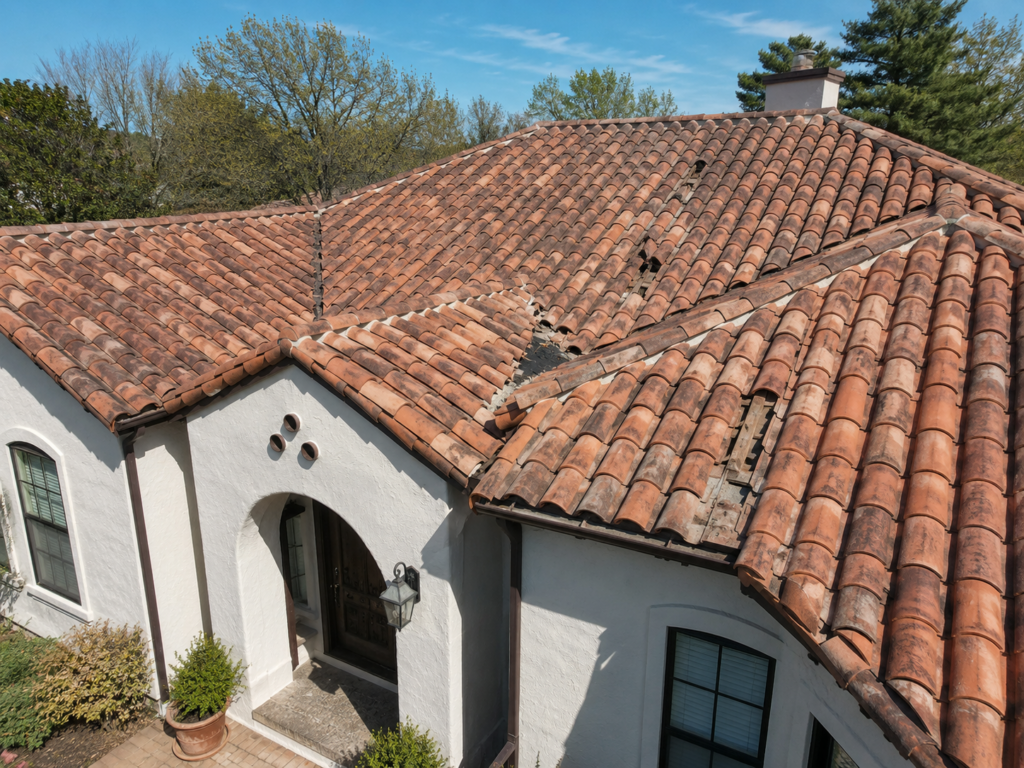
Then there's the climate problem, and this is the big one for Indiana. Natural clay and concrete tile can absorb water, and in a freeze-thaw climate, that trapped moisture freezes, expands, and works the tile apart, cracking and spalling it over the years. The Southwest never has to think about this. Here, it's one of the main reasons a clay barrel roof can age faster than the brochure promised.
Add the everyday fragility: barrel tiles crack and break when walked on, so every repair is delicate, plus the high cost of the material and the specialized crews who install it, plus the headache of matching color and profile years later, and the "authentic" route starts to look like a lot of money and risk for a roof that may not love Indiana weather.
And the usual fallback doesn't work here at all. With Victorian slate or Craftsman shake, a homeowner can at least try to fake it with asphalt. You can't fake a barrel roof. The whole look depends on that three-dimensional rolling profile, and flat shingles simply cannot reproduce it. For a Mediterranean home, asphalt isn't a compromise; it's giving up on the style entirely.
A better option: Brava Spanish Barrel
This is where composite barrel tile solves the problem rather than forcing a trade-off. Brava's Spanish Barrel is a synthetic tile molded from real clay barrel tile, so it carries the authentic S-curve profile, the depth, and the blended terracotta color that define the look. From the street, it reads as a genuine clay-tile roof. But it sheds nearly everything that makes real clay impractical in the Midwest.
It's a fraction of the weight. Because Brava is so much lighter than clay or concrete, most homes can carry it with no added structural reinforcement, a major savings on a reroof, and a smarter starting point on a new build, where you're not paying to frame for a heavier roof.
It's built for freeze-thaw. Brava doesn't absorb water the way clay does, so the freeze-and-crack cycle that punishes traditional tile in Indiana winters simply isn't a factor. It's also engineered to resist impact and high winds, and it won't shatter underfoot the way a clay tile will, which makes future maintenance far less nerve-wracking.
It lasts, and it's backed in writing. Brava Spanish Barrel carries a 50-year limited warranty and comes in fire-rated assemblies, a level of durability and coverage that's hard to get from a natural tile roof in this climate.
It keeps the authentic color. Real terracotta gets its richness from blended, varied tones, and Brava is made to match that. Color is cast through the full thickness of every tile and can be custom blended, so you get the warm, layered Mediterranean look without surface fading or the chalky lime bloom that can appear on aging clay.
Add it up, and you get the part that matters most: the true Spanish-Revival barrel-tile look, on a roof actually built to survive Indiana.
Why it fits the style, and the climate
A Mediterranean home is a commitment to a look, and that look has to hold up to be worth it. Brava lets you honor the architecture, the low roofline, the rolling tile, the warm color, without betting the house on a material that struggles with freeze-thaw and adds thousands in structural cost. It's just as much at home on a faithful restoration of an existing Spanish-style house as it is on a new Mediterranean build going up today.
If your home happens to sit in a designated historic district, it's worth confirming any local rules on roofing materials before you commit; many boards accept high-quality composite tile, and we're glad to help you sort out where your property stands.
Why the installer matters as much as the material
A barrel-tile roof lives or dies on its details, the way the courses run, the hips and ridges, the flashing and finishing that keep water out across a low-pitched roof. That's craftsmanship. As a certified Brava installer, Wabash Valley Exteriors is trained to install Brava in accordance with the manufacturer's specifications, which also helps keep your 50-year warranty valid. We're a family-owned company serving Lafayette, West Lafayette, and the surrounding Tippecanoe County area since 2017, and we also handle storm damage and insurance claims.
If you love the Mediterranean look but worry it couldn't last in the Midwest, it can now.
Ready to see Brava Spanish Barrel on your home? Request a free, no-obligation estimate or call (765) 838-0882. We'll look at your roof or your plans, walk through the options, and show you how to get the Spanish-Revival look on a roof built for Indiana.