
Ponding Water on a Commercial Flat Roof: When to Call a Roofer
After a summer downpour, some water may remain briefly on a commercial low-slope roof. The concern grows when the same areas stay wet long after the rest of the roof has drained, especially when the water returns after every storm.
Ponding water is not a diagnosis by itself. The cause may be as simple as debris around a drain or as involved as compressed insulation, deck movement, inadequate slope, or a drainage design problem.
For a Lafayette building owner or facility manager, the practical response is to document the pattern, protect interior operations, and arrange a roof evaluation before a small drainage problem becomes a leak, damaged insulation, or a repeated maintenance expense.
What Counts as Ponding Water?
In roofing guidance, positive drainage is commonly described as a roof’s ability to drain within 48 hours after precipitation under conditions that account for deck deflection and roof slope. That benchmark is useful, but it should not be treated as permission to ignore recurring water for two days.
Weather matters. Continued rain, snowmelt, shade, humidity, and low temperatures can slow drying. So can dirt or biological growth. A qualified roofer should evaluate the actual roof assembly, membrane manufacturer requirements, drainage design, and the history of the area.
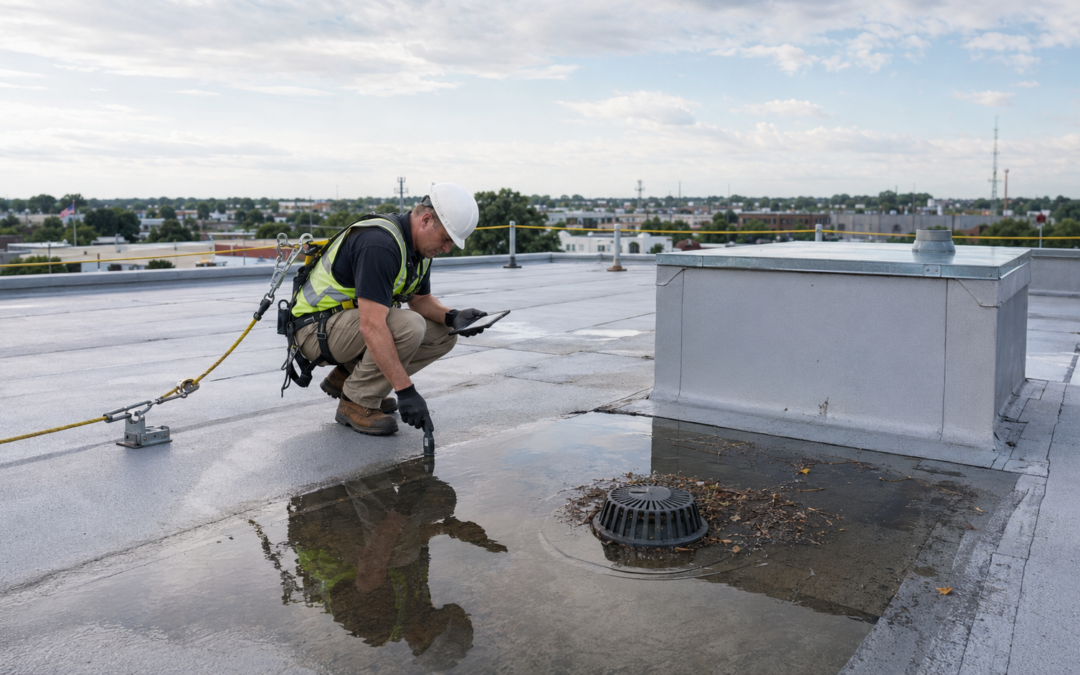
The most useful observation is repetition: Does water collect in the same location? How deep is it? How long does it remain? Is the area near a drain, rooftop unit, seam, repair, or visible low spot?
Why Standing Water Deserves Attention
Water adds weight and keeps the membrane, seams, flashings, and repairs wet longer. Debris settles at the water line. Temperature changes repeatedly, heating and cooling the wet area. If the membrane already has a puncture or weak seam, prolonged exposure can increase the opportunity for water entry.
Ponding may also be a symptom of another condition. Wet or compressed insulation can create a low area. A blocked drain or scupper can reduce capacity. A roof deck may deflect. An equipment curb, repair, or later roof addition may interrupt the intended drainage path.
Not every pond requires roof replacement. Many are addressed through maintenance, drain correction, tapered insulation, localized repair, or a larger drainage plan. The correct solution depends on the cause.
Common Causes on Flat and Low-Slope Roofs
- A commercial roof inspection may find one or more of the following:
- Leaves, gravel, trash, or roofing debris blocking a drain or scupper
- A missing, damaged, or poorly seated drain strainer
- Low areas caused by compressed or wet insulation
- Deck deflection or structural movement
- Insufficient slope or an interrupted drainage path
- Settled roof patches or repeated coatings that changed surface levels
- Clogged internal drain piping or downspouts
- Rooftop equipment, curbs, or walk pads redirecting water
- What a Building Owner Can Document Safely
Do not send untrained staff onto a wet roof. Low-slope roofs can be slippery, and skylights, roof edges, electrical equipment, and concealed weak areas create serious hazards.
From an approved access point or through a qualified maintenance team, document the date and end time of the rain, approximate location, photographs from consistent angles, visible depth where it can be measured safely, and whether interior leaks appeared.
Mark the interior location of stains or drips on a floor plan. Water can travel within the roof assembly or along structural components, so the interior symptom may not sit directly below the entry point.
When to Call a Commercial Roofer
Arrange an inspection when water remains after surrounding areas have dried, the same pond returns repeatedly, drains are slow, a new low spot appears, or the building has interior moisture.
Call promptly if the membrane is torn, seams are open, flashing has pulled away, a drain is damaged, the roof surface feels soft, or water is near electrical or mechanical equipment. Active leaking, ceiling movement, or suspected structural distress requires immediate professional attention and may also require emergency services or a structural professional.
After hail, high wind, or work by another trade, inspect sooner. HVAC service, sign installation, solar work, and repeated foot traffic can puncture or disturb a membrane even when no problem is visible from inside.
What the Roof Inspection Should Cover
A commercial roofer should evaluate drains, scuppers, gutters, downspouts, membrane condition, seams, flashings, penetrations, equipment curbs, previous repairs, and visible slope or settlement.
If moisture below the membrane is suspected, the contractor may recommend additional testing or selective investigation. The inspection should distinguish a surface drainage issue from wet insulation, deck movement, or a broader design concern.
Ask for photographs, the likely cause, immediate actions, repair options, and a plan for confirming that drainage improved after the work.
Maintenance, Repair, or Replacement?
Maintenance may solve debris and routine drain issues. Localized repair may address a failed seam, puncture, drain detail, or small settled area. Tapered insulation or added drainage may be needed when slope is the underlying problem.
Replacement becomes a stronger consideration when the membrane has widespread deterioration, moisture is extensive, the roof has repeated failures, or repairs would not provide a dependable service life. A coating is not automatically a solution for ponding; the existing roof, moisture condition, slope, drainage, and coating manufacturer requirements must be evaluated first.
The decision should account for the roof’s age, assembly, warranty, leak history, insulation condition, operations below, and long-term ownership plan.
Build Ponding Checks into the Maintenance Plan
Commercial roofs benefit from documented inspections and maintenance. Schedule checks at appropriate intervals, after severe storms, and after other trades have worked on the roof. Keep drains clear and maintain a roof-access log.
Photographs from the same locations make changes easier to spot over time. They also give the property team a record for budgeting and repair planning.
Wabash Valley Exteriors inspects, repairs, maintains, and replaces commercial flat and low-slope roofing systems in Lafayette and surrounding communities. If water is repeatedly staying on your roof, schedule an evaluation before the next heavy rain tests the same area again.
Frequently Asked Questions
Is ponding water normal on a flat roof?
A small amount immediately after rain may occur, but recurring water that remains after the rest of the roof drains deserves evaluation. The roof system, weather, depth, location, and manufacturer requirements all matter.
How long is too long for water to sit on a commercial roof?
Positive drainage is commonly associated with drainage within 48 hours after precipitation, but recurring or deep water should be evaluated sooner rather than ignored until a deadline.
Can a clogged roof drain cause a leak?
Yes. A clogged or slow drain can keep water on the membrane, raise the water level at flashings and penetrations, and expose existing defects for longer periods.
Will a roof coating fix ponding water?
A coating does not correct slope, clogged drainage, wet insulation, or structural deflection. Some products also have specific ponding water limitations. The cause and roof condition should be evaluated first.
Wabash Valley Exteriors serves Lafayette, West Lafayette, and surrounding communities with commercial roof inspections, repairs, and replacements. Call (765) 838-0882 or request a free estimate to find out whether your roof should be repaired now, replaced this summer, or monitored for a later project.