

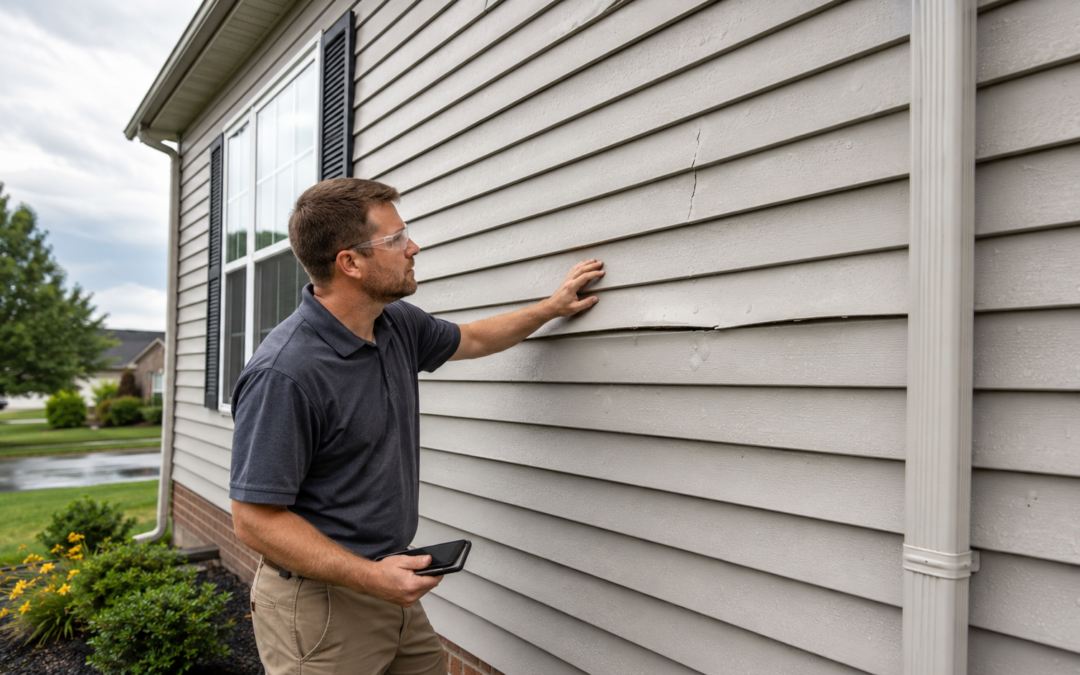
Storm-Damaged Siding in Lafayette: Repair or Replace?
After a strong Lafayette storm, homeowners usually look at the roof first. That makes sense, but wind, hail, and flying debris can also damage siding, trim, gutters, window wraps, and the weather-resistant layers behind them.
Some siding damage is obvious from the ground. A panel may be missing, cracked, punctured, or pulled away at a corner. Other damage is easy to miss until rain reaches an opening or a loose section begins moving in the next wind.
The right answer is not always full replacement. A focused repair can make sense when damage is limited and a compatible material is available. Replacement deserves consideration when the damage is widespread, the wall system has been exposed, or a patch would create new performance or appearance problems.
What Storm Damage to Siding Can Look Like
Different siding materials respond differently to impact and wind. Vinyl panels may crack, chip, loosen, or pull away from the nailing hem. Metal siding can dent or crease. Fiber-cement boards may crack or break at edges. Trim and corner posts can separate even when the main wall still looks intact.
Walk around the home only after conditions are safe. From the ground, look for missing panels, open seams, cracks, holes, dents, bowed sections, loose trim, and pieces on the lawn. Check every side of the house because wind direction and nearby trees can concentrate damage on one elevation.
Do not pry panels up or climb a ladder during a post-storm check. A professional can inspect fastening, overlaps, penetrations, flashing, and the wall area behind visibly damaged pieces.
When a Siding Repair May Be Enough
Repair is often reasonable when the damage is limited to a small area, the wall underneath is dry and sound, and a compatible replacement panel or board can be installed correctly.
A repair may also work when a loose panel can be reset without distortion, a short section of trim can be replaced, or a single impact point has not affected adjacent pieces. The contractor should still check why the siding moved. Reattaching a panel without correcting broken fasteners or improper clearance may not solve the problem.
The goal is not simply to cover the visible mark. The repaired section needs to shed water, move as the product is designed to move, and remain securely attached.
When Replacement Deserves a Closer Look
Replacement may be the better path when damage covers several walls, many panels are brittle or cracked, the substrate or water-resistive barrier is exposed, or water has entered behind the siding.
It may also become practical when the original product is discontinued or the color has faded enough that a patch will be conspicuous. A contractor should explain whether a close match is available and show you the likely appearance before work begins.
Age alone does not decide the issue, but older siding can become harder to remove and reinstall without causing additional breaks. Widespread wear combined with storm damage may change the economics of repeated repairs.
Do Not Confuse Storm Damage with Normal Wear
Fading, chalking, old caulk, previous impact marks, and installation problems can resemble recent storm damage. An inspection should separate new openings or impact from long-term deterioration.
Photographs are useful. Capture wide views of each wall and close views of visible damage, along with the date. If you have older exterior photos, they may help show the pre-storm condition.
A contractor can document the physical condition of the siding, but your insurance carrier determines coverage under your policy. Coverage, deductibles, matching provisions, depreciation, and filing requirements vary. Avoid anyone who promises that damage will definitely be paid before the carrier evaluates the claim.
What an Exterior Inspection Should Include
Storms rarely affect one product in isolation. A useful exterior inspection should consider siding, corner posts, trim, soffit, fascia, window and door wraps, gutters, downspouts, roof edges, and visible sealant joints.
The contractor should look for openings that can admit wind-driven rain, damaged flashing at wall intersections, loose mounting blocks around lights or vents, and signs that water has moved behind the finish.
Inside the home, note new stains, damp drywall, peeling paint, or musty odors near exterior walls. These signs do not prove the siding is the source, but they help guide the inspection.
What to Do After You Find Damage
First, keep people away from loose material, downed wires, broken glass, and unstable trees. If water is entering, take reasonable temporary steps that are safe and document what you do.
Next, photograph the damage and contact a qualified local exterior contractor for an inspection. If you believe the damage may be covered, review your policy and contact your insurer or agent for instructions. Keep estimates, photographs, receipts, correspondence, and any damaged material your carrier asks you to retain.
Do not sign a blank contract or allow pressure to turn an inspection into a same-day commitment. The written proposal should identify the material, repair area, color or match expectations, flashing and weather-barrier work, cleanup, price, and warranty.
Repair or Replace: The Decision in Plain Language
A repair makes the most sense when the damage is isolated, compatible material is available, and the wall behind it remains protected. Replacement becomes more reasonable when the damage is broad, the product cannot be matched or safely worked on, or the storm exposed a larger wall-system problem.
Wabash Valley Exteriors installs and replaces siding for homeowners in Lafayette, West Lafayette, and nearby Indiana communities. If a storm left you unsure what changed, start with an exterior inspection and a written explanation of the options.
Frequently Asked Questions
Can one damaged siding panel be replaced?
Often, yes, if a compatible panel is available and adjacent siding can be moved without breaking. The contractor should also inspect the fastening and weather-resistant layers behind the damaged section.
Does hail damage always leave holes in siding?
No. Hail may leave cracks, chips, dents, bruising, or damage at panel edges and trim. The appearance depends on the siding material, hail size, wind, temperature, and impact angle.
Will homeowners insurance cover storm-damaged siding?
Coverage depends on the cause of loss, policy language, deductible, exclusions, and the carrier’s evaluation. A contractor can document physical damage, but the insurance company determines coverage.
Can new siding be matched to old siding?
Sometimes. Product availability, profile, texture, exposure, color, and fading all affect the match. Ask to see a sample against the home in daylight before approving a repair.
Wabash Valley Exteriors serves Lafayette, West Lafayette, and surrounding communities with residential siding inspections, repairs, and replacements. Call (765) 838-0882 or request a free estimate to find out whether your roof should be repaired now, replaced this summer, or monitored for a later project.