
How to Compare Roofing Estimates in Lafayette, Indiana
A roof estimate should help you make a decision, not leave you comparing two totals with no idea why they are different.
One proposal may include new flashing, ventilation corrections, deteriorated decking allowances, property protection, and a detailed cleanup plan. Another may list only a shingle brand and one final price. The second number may be lower, but it may not describe the same job.
For a Lafayette homeowner, the useful question is not simply, “Which estimate costs less?” It is, “What roof system, installation process, and responsibility does each estimate actually include?”
Start by Making Sure the Estimates Cover the Same Work
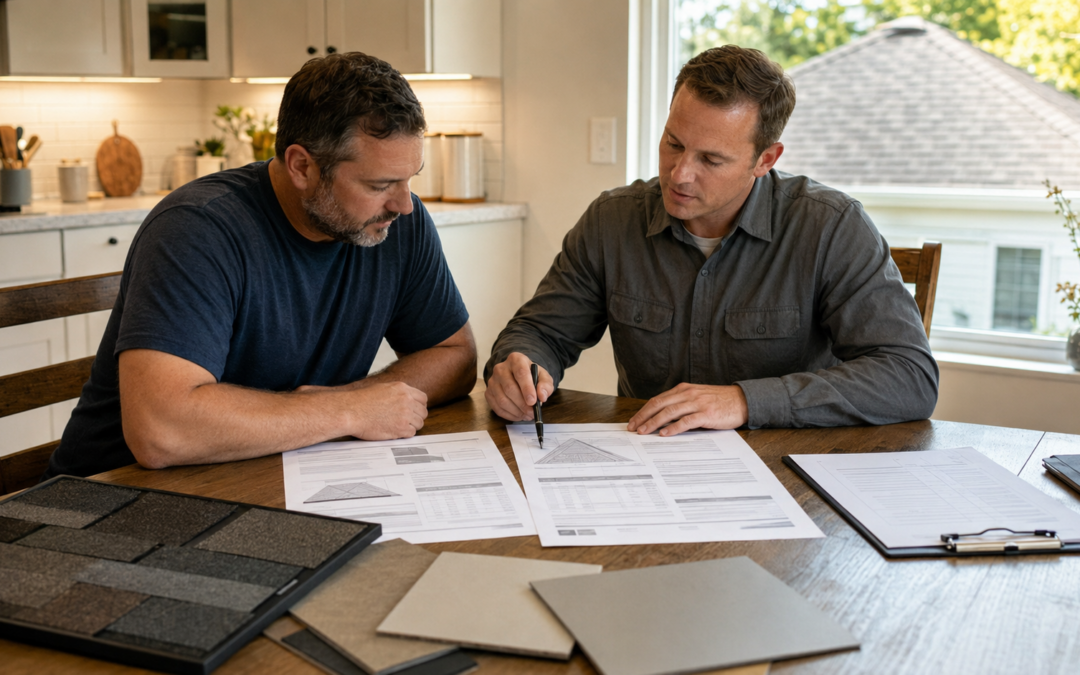
Put the proposals side by side and compare the scope line by line. Confirm whether each contractor is estimating a repair, a partial replacement, or a full tear-off and replacement. If one contractor expects to install over an existing layer while another plans to remove the old roofing, the prices are not directly comparable.
The Federal Trade Commission recommends getting multiple written estimates and checking that each one describes the work, materials, completion date, and price. It also warns homeowners not to automatically choose the lowest bidder.
In Indiana, home-improvement contracts over $150 generally must be in writing. The Indiana Attorney General advises homeowners to look for the job price, payment schedule, detailed work and materials, estimated start and completion dates, contractor information, and written warranties.
Compare the Roofing System, Not Just the Shingle
Shingles are the visible layer, but a roof depends on several components working together. Ask whether each estimate identifies the manufacturer and product line for the shingles, underlayment, ice-and-water protection, starter shingles, ridge caps, flashing, and ventilation products.
A proposal that says “architectural shingles” leaves important questions unanswered. Product line, color, impact rating when applicable, installation method, and manufacturer requirements can affect both performance and warranty eligibility.
Also check how the estimate handles roof penetrations and transitions. Pipe boots, chimneys, skylights, wall intersections, valleys, and sidewalls are common places for water to enter when flashing details are incomplete.
Look Closely at Decking and Hidden Damage Language
The roof deck cannot be fully evaluated until the old roofing is removed. A good proposal should explain what happens if the crew finds soft, rotted, or delaminated decking.
Look for the price per sheet or per square foot for replacement decking, who authorizes additional work, and how the contractor documents the condition. This does not mean hidden damage will be found. It means you will know how it is handled if it is.
Vague language such as “wood extra” can turn a clear estimate into a surprise invoice. A defined allowance or unit price makes the process easier to understand.
Check Ventilation, Drip Edge, Gutters, and Fascia
Roof replacement is a good time to evaluate the parts that meet the roof edge and attic. Ask whether the contractor will inspect intake and exhaust ventilation, drip edge, fascia, soffits, and existing gutters.
The estimate should not automatically sell you every related component. It should explain what can remain, what should be corrected, and why. For example, sound gutters may stay in place, while loose gutters, damaged fascia, or poor roof-edge details may need attention.
If ventilation changes are recommended, ask how the intake and exhaust will work as a balanced system. Adding one vent product without checking the rest of the attic can create an incomplete solution.
Review Property Protection and Cleanup
Roof replacement creates falling debris, nails, dust, and repeated trips across the property. A written proposal should explain how the crew will protect siding, windows, landscaping, air-conditioning equipment, driveways, and walkways.
Look for cleanup details such as magnetic nail sweeps, debris removal, protection around entrances, and a final walkthrough. If a dumpster or trailer will be used, ask where it will be placed and whether driveway protection is included.
This part of the estimate matters on a tight Lafayette lot just as much as it does on a larger rural property. The working space changes, but the contractor’s responsibility to plan should not.
Understand the Warranty Before You Count It
Most roof proposals mention a warranty. The important details are who provides it, what it covers, how long it lasts, whether registration is required, and what could void it.
Separate the manufacturer’s material warranty from the contractor’s workmanship warranty. Ask for both in writing. A long product warranty does not automatically cover every labor cost, leak, accessory, or installation error.
If two estimates use the same shingle but offer different warranty levels, ask whether the difference comes from installer certification, included components, registration, or another requirement.
Ask About Schedule, Payment, Permits, and Changes
Confirm the anticipated start window, estimated project duration, payment schedule, permit responsibility, and process for weather delays. Avoid relying on verbal promises that do not appear in the written agreement.
The proposal should also explain how change orders work. If the scope changes, the added work and price should be documented before it is completed whenever practical.
Be cautious with pressure to sign immediately, unusually large upfront payments, blank contract spaces, or a price that is far below every other proposal without a clear explanation.
A Simple Roofing Estimate Checklist
Before choosing a contractor, confirm that you can answer these questions:
- Is the scope a repair, overlay, or full tear-off?
- Are the exact roofing products and accessories named?
- Are flashing, valleys, penetrations, and roof edges addressed?
- Is damaged decking priced and authorized clearly?
- Are ventilation and drainage evaluated?
- Are property protection, cleanup, and disposal included?
- Are workmanship and manufacturer warranties explained separately?
- Are the schedule, payment, permits, and change orders in writing?
- Can the contractor provide current insurance information and local references?
The Lowest Number Is Not Always the Lowest Cost
A detailed estimate gives you a way to judge value before the old roof comes off. When the scope is clear, you can see whether a price difference reflects better materials, additional work, stronger property protection, or simply a different approach.
Wabash Valley Exteriors provides residential roof inspections and detailed estimates for homeowners in Lafayette, West Lafayette, and surrounding communities. If you are planning a roof replacement, bring your questions. A good estimate should make the project easier to understand.
Frequently Asked Questions
Should I get three roofing estimates?
Multiple written estimates can help you compare scope, materials, scheduling, and price. The exact number is less important than making sure each contractor is evaluating the same roof and describing the proposed work clearly.
Why are two roofing estimates so far apart?
The estimates may include different tear-off plans, products, flashing work, decking allowances, ventilation changes, warranties, cleanup, or insurance and permit responsibilities. Ask each contractor to explain the differences line by line.
Does the cheapest roofing estimate mean lower quality?
Not automatically. A lower price may reflect a smaller scope, different material, or a more efficient operation. It can also omit work you expected. Compare what is included before judging the total.
What should a roof estimate say about rotten decking?
It should explain how damaged decking will be identified, documented, priced, and authorized. Because the deck is partly hidden before tear-off, a clear unit price or allowance helps prevent surprises.
Wabash Valley Exteriors serves Lafayette, West Lafayette, and surrounding communities with residential roof inspections, repairs, and replacements. Call (765) 838-0882 or request a free estimate to find out whether your roof should be repaired now, replaced this summer, or monitored for a later project.