
What Causes Ponding Water on Flat Roofs?
What Causes Ponding Water on Flat Roofs?
Ponding water is one of the most common warning signs of commercial flat roof trouble in Indiana.
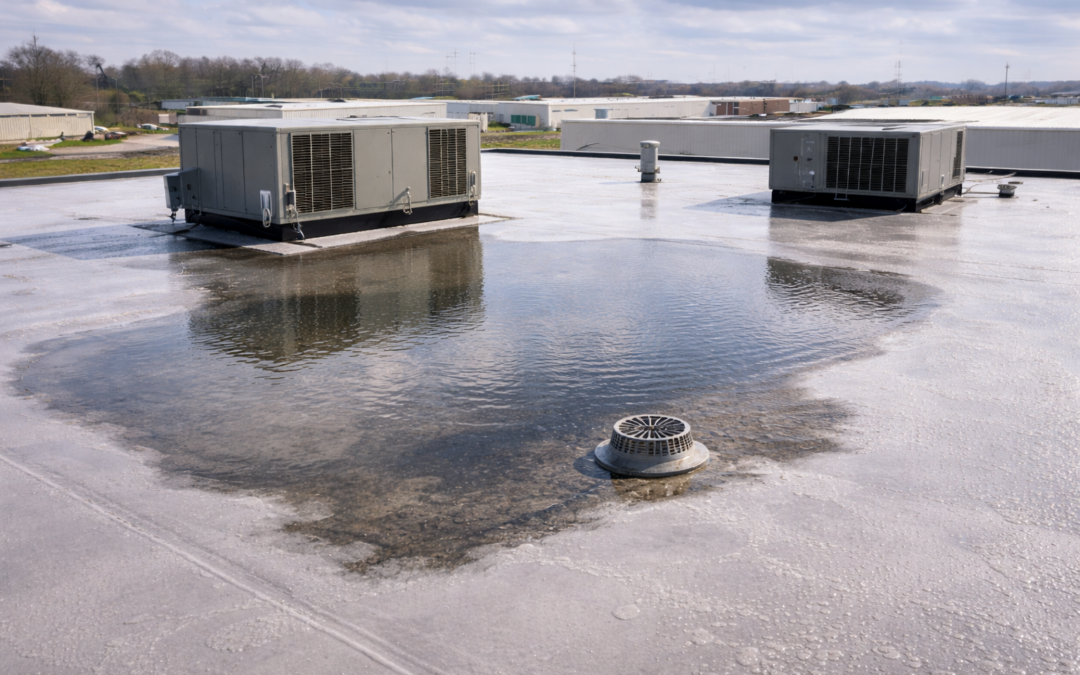
If water remains on a flat roof for more than 48 hours after rainfall, it is considered ponding. While small amounts may seem harmless, long-term standing water can shorten membrane lifespan, weaken seams, and increase the risk of leaks.
In Indiana’s freeze-thaw climate, ponding water can become a serious structural issue.
Quick Answer: Why Does Ponding Water Happen?
Ponding water on flat roofs is typically caused by:
-
Improper drainage design
-
Clogged drains or scuppers
-
Roof settling or structural deflection
-
Insulation compression
-
Membrane installation errors
Addressing the root cause early prevents premature roof failure.
1. Poor Drainage Design
Flat roofs are not perfectly flat. They are designed with a slight slope to direct water toward drains or scuppers.
When the slope is inadequate, water collects in low spots.
This is common on:
-
Older commercial buildings
-
Roofs that were retrofitted
-
Buildings where insulation was unevenly installed
Over time, even small depressions can worsen.
2. Clogged Roof Drains and Scuppers
Leaves, debris, and sediment buildup restrict water flow.
In Lafayette and across Indiana, fallen leaves and spring storm debris frequently block commercial roof drainage systems.
When drains clog:
-
Water backs up
-
Membranes remain submerged
-
Seams experience prolonged stress
Routine inspection prevents most drainage blockages.
3. Structural Deflection
Commercial buildings expand and contract seasonally.
Heavy snow loads and repeated freeze-thaw cycles can cause structural deflection. Over time, roof decking may sag slightly, creating water traps.
Even high-quality membrane systems, including those sourced through Malarkey Commercial Roofing, depend on proper structural support underneath.
Membrane strength does not compensate for structural sagging.
4. Insulation Compression
Flat roofs rely on insulation boards beneath the membrane.
If insulation becomes saturated from previous leaks or compresses under weight, low spots develop.
This creates a cycle:
Water ponds
Insulation weakens
Depression increases
More water accumulates
Unchecked, this accelerates roof deterioration.
5. Installation Errors
Improper installation contributes significantly to ponding issues.
Common installation-related causes:
-
Incorrect slope planning
-
Poor seam welding
-
Uneven insulation layering
-
Inadequate drainage placement
Even premium commercial membrane systems require precise installation to perform properly.
Why Ponding Water Is a Serious Problem in Indiana
Indiana weather amplifies ponding damage.
Freeze-Thaw Expansion
Water expands when frozen. If ponded water freezes:
-
Seams stretch
-
Flashing pulls away
-
Small cracks widen
Repeated cycles weaken the system.
UV Exposure
Standing water reflects sunlight and increases heat stress on membranes during the summer months.
Added Weight
One inch of standing water weighs over five pounds per square foot.
On large commercial roofs, this can create thousands of pounds of added load.
How to Identify Ponding Water Early
Look for:
-
Visible low spots after rainfall
-
Discoloration or membrane wrinkling
-
Soft areas underfoot
-
Water stains inside the building
-
Rusted HVAC supports
If water remains 48 hours after rain, evaluation is recommended.
Can Ponding Water Be Fixed?
Yes, depending on severity.
Minor Ponding
May be corrected by:
-
Clearing drains
-
Adding tapered insulation
-
Improving slope through overlay systems
Moderate to Severe Ponding
May require:
-
Structural correction
-
Partial roof replacement
-
Full membrane replacement
Professional evaluation determines the most cost-effective solution.
Prevention: How to Avoid Ponding Water
The most effective prevention strategy includes:
-
Twice-yearly commercial roof inspections
-
Drain cleaning before winter and spring
-
Prompt repair of low areas
-
Monitoring insulation condition
Proactive maintenance extends roof life significantly.
Commercial Flat Roofing in Lafayette, Indiana
Buildings in Lafayette and across Tippecanoe County face:
-
Heavy spring rainfall
-
Snow accumulation
-
Temperature fluctuations
-
Seasonal debris buildup
Ponding water is one of the earliest signs that a commercial roof needs attention.
Wabash Valley Exteriors provides commercial roof inspections, drainage evaluations, repair services, and full roof replacement throughout Lafayette and surrounding Indiana communities.
Addressing ponding early protects insulation, structure, and long-term roofing investment.
Frequently Asked Questions
Is ponding water normal on a flat roof?
Small temporary pooling after rainfall is common. Water that remains longer than 48 hours should be evaluated.
How much ponding water is too much?
Any water that does not drain naturally within 48 hours may indicate slope or drainage problems.
Can ponding water void a roof warranty?
Some manufacturer warranties limit coverage if ponding is not addressed. Regular inspections help protect warranty compliance.
Does ponding always require roof replacement?
Not always. Minor slope or drainage corrections may resolve the issue.
Final Thought
Ponding water is rarely just a surface issue. It often signals deeper drainage or structural concerns.
Identifying and correcting the root cause protects commercial buildings from premature roof failure.
Concerned About Ponding Water on Your Commercial Roof?
Standing water is often an early warning sign of drainage or structural issues. A professional inspection can determine whether the problem requires simple correction or more extensive repair.
Wabash Valley Exteriors provides commercial roof inspections, drainage evaluations, and repair solutions for businesses throughout Lafayette and surrounding Indiana communities.
Call (765) 838-0882 to schedule a commercial roof assessment.