
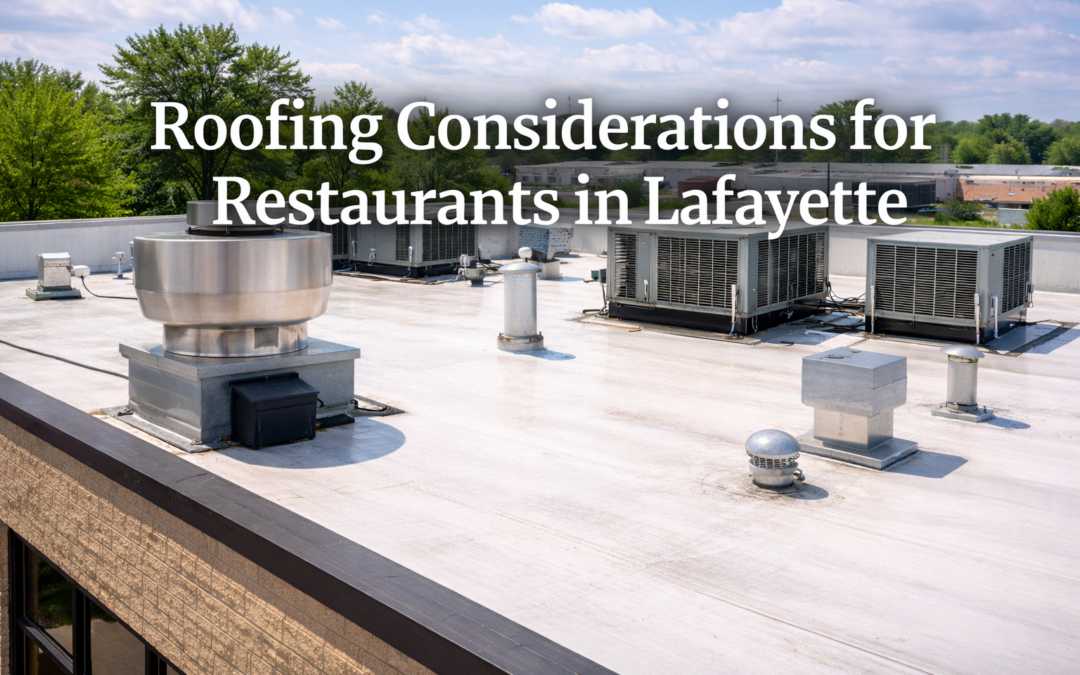
Roofing Considerations for Restaurants in Lafayette
Restaurants in Lafayette face roofing challenges that differ from those of warehouses, retail centers, and office buildings.
Grease exhaust, high humidity, rooftop equipment loads, and heavy seasonal storms all place additional stress on commercial flat roofing systems.
Selecting the right membrane and maintenance plan is critical to protecting the structure, maintaining health compliance, and avoiding unexpected downtime.
Why Restaurant Roofs Require Special Attention
Unlike most commercial buildings, restaurants generate:
-
Grease vapor from kitchen exhaust systems
-
Constant HVAC demand
-
Frequent rooftop equipment servicing
-
Higher humidity levels
Over time, grease and moisture can degrade roofing materials, especially around exhaust fans and penetrations.
A standard commercial roofing approach may not be sufficient.
Common Roofing Challenges for Lafayette Restaurants
1. Grease Exhaust Damage
Grease-laden vapors from kitchen hoods settle on roof surfaces.
If not cleaned regularly, grease can:
-
Break down membrane materials
-
Loosen adhesives
-
Compromise seams
PVC roofing systems are often selected for restaurant facilities because of their resistance to chemical and grease exposure.
2. Rooftop Equipment Overload
Restaurants often have:
-
Multiple HVAC units
-
Exhaust fans
-
Makeup air units
-
Refrigeration equipment
Improperly supported equipment can stress roofing membranes and create leak points.
3. Frequent Foot Traffic
Service technicians regularly access restaurant rooftops.
Without proper walkway pads and reinforcement, membrane punctures can occur.
4. Drainage Blockage
Grease residue and debris can clog drains, increasing the risk of ponding water.
In Lafayette’s heavy spring rain seasons, clogged drains can quickly become a structural concern.
Best Roofing Materials for Restaurants in Indiana
Not all commercial membranes perform equally in restaurant environments.
PVC Roofing
PVC is often preferred because:
-
Heat-welded seams provide strong water resistance
-
Membrane resists grease and chemical exposure
-
Durable under rooftop traffic
TPO Roofing
TPO may perform well when:
-
Reflective performance is desired
-
Grease containment systems are properly maintained
EPDM Roofing
EPDM can be used, but it is more susceptible to grease degradation without protection.
Material quality matters. Commercial-grade systems sourced through manufacturers such as Malarkey Commercial Roofing provide consistent membrane durability and seam integrity.
Proper installation and detailing are just as important as membrane selection.
Health Code and Liability Considerations
Roof leaks in restaurants create more than structural problems.
They can lead to:
-
Ceiling tile damage
-
Mold growth
-
Health code violations
-
Operational shutdowns
Routine inspection reduces the risk of disruption.
Recommended Inspection Schedule for Lafayette Restaurants
Restaurant facilities should schedule:
-
Twice-yearly inspections (spring and fall)
-
Drain cleaning before heavy rainfall seasons
-
Exhaust fan area inspections are to be performed quarterly
-
Immediate inspection after major storms
Grease containment areas require special attention.
Signs Your Restaurant Roof Needs Evaluation
Look for:
-
Grease is pooling around the exhaust fans
-
Soft spots near rooftop equipment
-
Ceiling stains in dining or kitchen areas
-
Water intrusion during heavy rain
-
Drain overflow during storms
Early action prevents major repair costs.
Storm Exposure in Lafayette
Lafayette restaurants’ experience:
-
High spring rainfall
-
Freeze-thaw winter cycles
-
Summer humidity
-
Occasional wind-driven storms
Membrane seams and flashing must remain secure to prevent infiltration.
Commercial Roofing for Restaurants in Lafayette
Restaurants across Lafayette and Tippecanoe County require roofing systems that account for grease exposure, equipment load, and seasonal weather conditions.
Wabash Valley Exteriors provides commercial roofing inspections, repairs, drainage correction, and full roof replacements for restaurant facilities throughout Lafayette and surrounding Indiana communities.
Professional evaluation ensures your roofing system supports safe, uninterrupted operation.
Frequently Asked Questions
What roofing material is best for restaurants?
PVC is often recommended due to its resistance to grease and chemical exposure.
Can grease damage a flat roof?
Yes. Grease can degrade membranes and weaken seam integrity if not properly maintained.
How often should restaurant roofs be inspected?
At least twice per year, with additional checks around exhaust equipment.
Does restaurant roofing require special maintenance?
Yes. Grease containment areas require routine cleaning and inspection.
Restaurant roofs require a proactive maintenance plan. Grease exposure and frequent rooftop traffic create unique risks that standard commercial systems must account for.
Regular inspection and proper membrane selection protect both building structure and business continuity.
Protect Your Restaurant Roof Before Small Issues Disrupt Operations
Grease exposure, rooftop equipment traffic, and seasonal storms can shorten the lifespan of commercial restaurant roofs. A professional inspection helps identify drainage issues, membrane wear, and exhaust-related damage before they impact your business.
Wabash Valley Exteriors provides commercial roofing inspections and repair services for restaurants throughout Lafayette and surrounding Indiana communities.
Call (765) 838-0882 to schedule a commercial roof evaluation.