

Flat Roofs and Indiana Storms: Unique Risks and How to Prevent Them
Flat Roofs and Indiana Storms: Unique Risks and How to Prevent Them
These conditions present a specific set of challenges for homes and buildings with flat roofs that differ from those experienced by sloped roofs. Knowing the risks and how to prevent damage can save you from expensive repairs and protect your property long-term.
Common Types of Flat Roofs in Indiana
Before diving into the risks, it’s helpful to understand the types of flat roofing systems commonly used in Indiana:
- Modified Bitumen: Asphalt-based, flexible, and layered for protection.
- EPDM (Rubber): Durable and cost-effective, but vulnerable to punctures.
- TPO (Thermoplastic): Reflective and energy-efficient, with heat-welded seams.
- Built-Up Roofing (BUR): Multi-layer system often finished with gravel.
- Ballasted or Green Roofs: Typically commercial, offering added insulation or aesthetics.
Each of these has its strengths and vulnerabilities when it comes to storms.
Unique Risks Flat Roofs Face in Indiana Weather
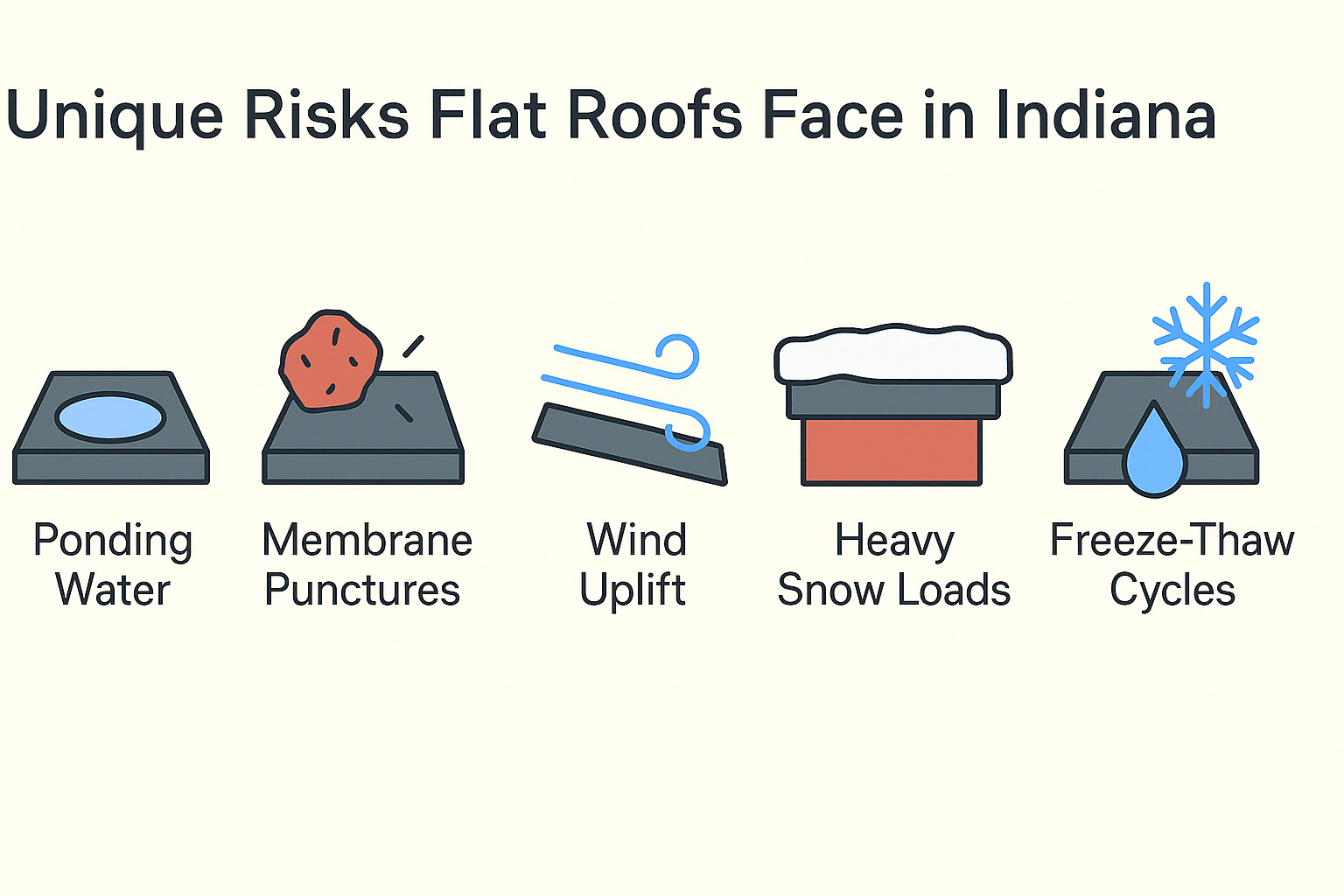
Flat roofs are more prone to storm-related damage due to their shape and drainage limitations. Here are the most common risks during Indiana’s storm seasons:
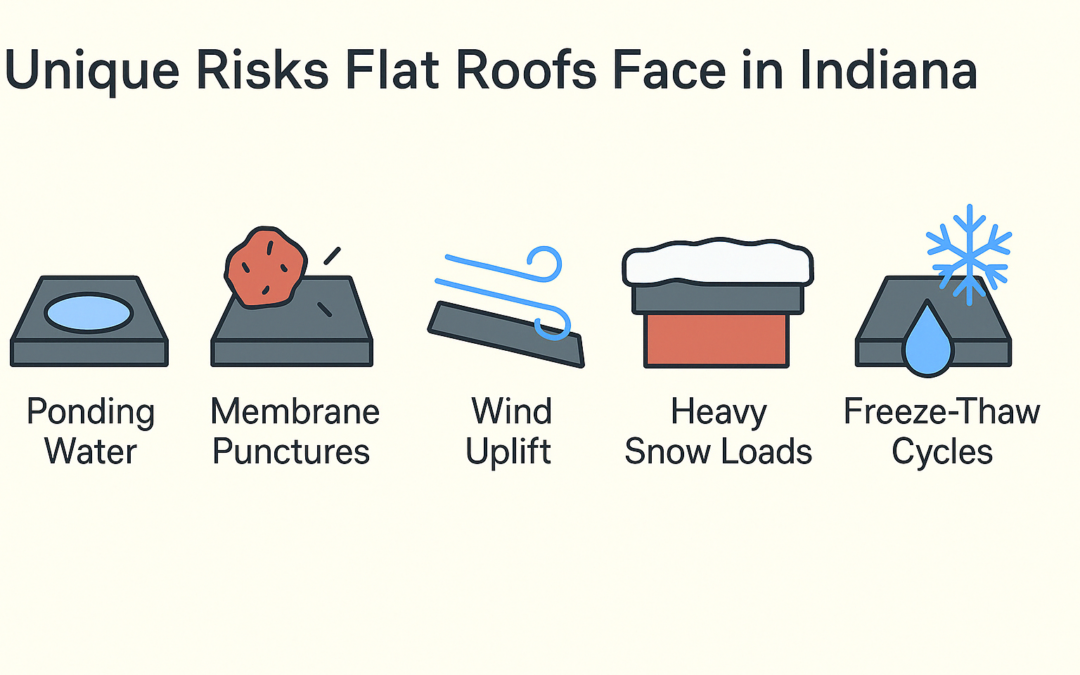
- Ponding Water: Flat roofs don’t shed water as efficiently. If water sits for more than 48 hours, it can weaken the membrane or lead to leaks.
- Membrane Punctures: Hailstones, branches, and flying debris can pierce rubber or thermoplastic surfaces.
- Wind Uplift: Strong gusts can loosen edges and flashing, particularly on aging roofs.
- Heavy Snow Loads: Snow accumulation adds significant weight, potentially stressing or cracking roof structures.
- Freeze-Thaw Cycles: Water that seeps into small cracks may freeze, expand, and cause further separation.
- Clogged Drainage Systems: Leaves, twigs, and debris can block drains or scuppers, worsening ponding during storms.
Warning Signs of Storm-Related Damage
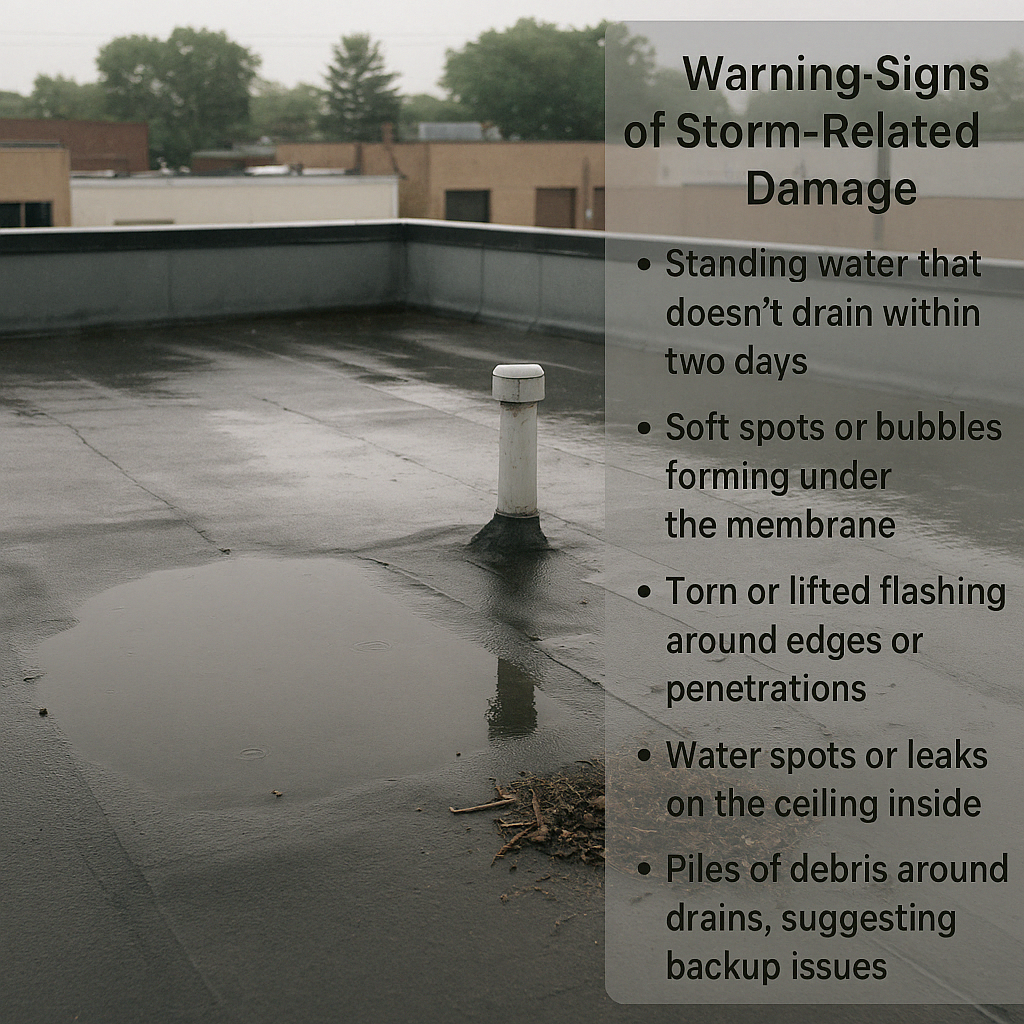
Even if you didn’t see damage during a storm, it’s smart to check for these signs:
- Standing water that doesn’t drain within two days.
- Soft spots or bubbles forming under the membrane.
- Torn or lifted flashing around edges or penetrations.
- Water spots or leaks on the ceiling inside.
- Piles of debris around drains, suggesting backup issues.
Preventive Steps to Protect Flat Roofs
Preventing storm damage starts with routine care and preparedness. Here’s what property owners can do:
- Schedule Regular Inspections: Ideally twice a year—once before and after storm season.
- Keep Drains Clear: Remove leaves and debris, and test that all drainage systems are working properly.
- Seal Problem Areas: Apply protective coatings and reseal seams and flashing before they become weak points.
- Apply Reflective or Protective Coatings: These help with UV resistance and water protection.
- Trim Overhanging Branches: Prevent them from falling and damaging your roof during a storm.
- Have a Snow Removal Plan: Work with a professional to clear snow without damaging the membrane.
When to Call a Professional
You don’t need to climb on the roof to spot every issue—but some situations do call for expert help:
- After any major hail or windstorm.
- If water pools or drains slowly.
- When flashing is visibly detached.
- To complete annual maintenance for warranty purposes.
Professional roofing teams can spot subtle signs of damage and help you take action before bigger problems develop.
Don’t Forget Insurance and Documentation
For both residential and commercial properties, documenting the condition of your roof is essential:
- Take photos of your roof each season or after major storms.
- Keep records of maintenance, repairs, and inspections.
- If you do need to file an insurance claim, this documentation will make the process smoother and faster.
Flat roofs are a practical and popular choice in Indiana, but they come with their own storm-related risks. By understanding what to look for and taking preventive measures, you can extend your roof’s lifespan and avoid costly surprises. Don’t wait until water is leaking through your ceiling—start inspecting and maintaining now.
Need a Flat Roof Inspection or Repair?
Contact Wabash Valley Exteriors for a storm-readiness inspection or a professional evaluation of your flat roof. Whether you’re looking for regular maintenance or emergency repairs, our team is here to help you stay one step ahead of Indiana’s wild weather.