
Best Commercial Flat Roofing Materials for Indiana Buildings
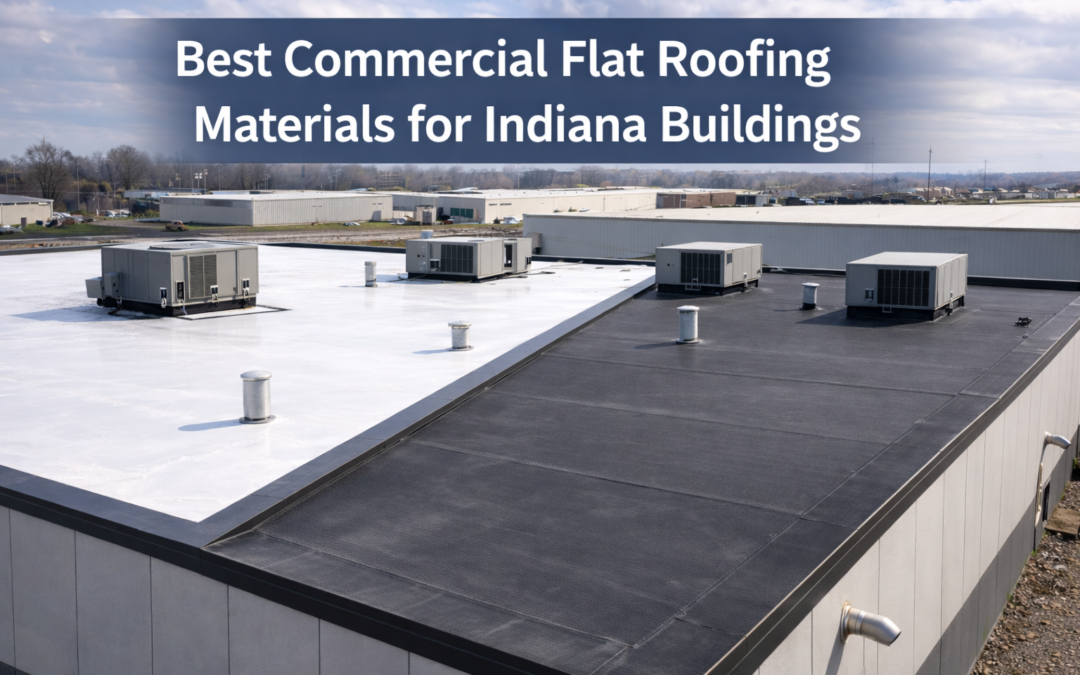
Best Commercial Flat Roofing Materials for Indiana Buildings
If you own or manage a commercial building in Indiana, choosing the right flat roofing material directly impacts durability, maintenance costs, and long-term performance.
Indiana’s climate brings:
-
Freeze and thaw cycles
-
Snow accumulation
-
Spring storms
-
High humidity summers
The best commercial flat roofing systems for Indiana must handle temperature swings, moisture exposure, and storm-driven stress.
Here is a practical breakdown of the top commercial flat roofing materials used across Lafayette and throughout Indiana.
Quick Answer: What Are the Best Commercial Flat Roofing Materials in Indiana?
The most reliable systems for Indiana buildings include:
-
TPO (Thermoplastic Polyolefin)
-
EPDM (Rubber Membrane)
-
PVC Roofing
-
Modified Bitumen
-
Built-Up Roofing (BUR)
Each material performs differently depending on building type, insulation design, and maintenance plan.
TPO Roofing
TPO is one of the most commonly installed commercial flat roofing systems in Indiana.
Why TPO Performs Well in Indiana
-
Reflective white membrane reduces heat absorption
-
Heat-welded seams provide strong water resistance
-
Good balance between durability and cost
-
Suitable for large industrial and warehouse buildings
TPO is frequently installed on warehouses and distribution centers in Lafayette where energy efficiency matters.
Lifespan in Indiana
20–25 years with proper installation and routine inspection.
EPDM Roofing
EPDM is a rubber membrane known for flexibility and durability.
Why EPDM Performs Well in Indiana
-
Excellent resistance to freeze-thaw cycles
-
Maintains flexibility during cold winters
-
Durable under snow loads
-
Straightforward repair process
EPDM is often selected for churches, schools, and commercial buildings that experience structural movement.
Lifespan in Indiana
20–30 years with consistent maintenance.
PVC Roofing
PVC is similar to TPO but offers enhanced resistance to chemicals and grease.
Why PVC Performs Well in Indiana
-
Heat-welded seams
-
Strong resistance to water infiltration
-
Suitable for restaurants or manufacturing facilities
-
Handles storm exposure effectively
PVC is often used for specialized commercial facilities.
Lifespan in Indiana
20–30 years.
Modified Bitumen
Modified bitumen is an asphalt-based system reinforced with polymer modifiers.
Why It’s Used in Indiana
-
Multi-layer durability
-
Good puncture resistance
-
Performs well under foot traffic
More common on older commercial buildings.
Lifespan
15–25 years depending on maintenance.
Built-Up Roofing (BUR)
BUR consists of layered asphalt and reinforcing materials.
Why It Works
-
Heavy-duty construction
-
Strong resistance to wear
-
Reliable waterproofing when maintained
Still found on some existing commercial properties.
Lifespan
20–30 years with proper upkeep.
How Indiana Weather Impacts Material Choice
Indiana weather directly affects commercial flat roof performance.
Freeze and Thaw Cycles
Membranes must expand and contract without cracking. EPDM performs especially well here.
Snow Accumulation
Drainage design is critical. Ponding water shortens lifespan regardless of material.
Spring Storm Systems
Heat-welded systems such as TPO and PVC provide strong seam performance when properly installed.
Summer Heat
Reflective systems like TPO reduce heat buildup on large commercial structures.
Why Product Quality Matters
Not all commercial roofing membranes are manufactured to the same standard.
Wabash Valley Exteriors installs commercial roofing systems sourced through Malarkey Commercial Roofing, known for:
-
Consistent membrane manufacturing standards
-
Commercial-grade durability
-
Strong seam integrity
-
Tested weather performance
Material quality combined with proper installation significantly influences lifespan.
A premium membrane installed incorrectly can fail early. A high-quality system installed with proper drainage and detailing performs consistently over time.
Matching Roofing Material to Building Type
Warehouses and Distribution Centers
TPO is often preferred due to reflective performance and energy efficiency.
Retail Centers
TPO or PVC may offer long-term efficiency advantages.
Churches and Schools
EPDM is commonly selected for flexibility and winter durability.
Industrial Facilities
PVC may be appropriate where chemical exposure is a concern.
Maintenance Extends Roof Life
Regardless of material, Indiana commercial roofs should be inspected twice per year:
-
Spring, after winter stress
-
Fall, before snow season
Inspections identify:
-
Seam separation
-
Drainage issues
-
Flashing fatigue
-
Membrane wear
Preventative maintenance adds years to roof life.
Commercial Flat Roofing in Lafayette, Indiana
Buildings throughout Lafayette and Tippecanoe County face seasonal weather extremes that accelerate wear without proper design and upkeep.
Selecting the right commercial flat roofing material should involve:
-
Building size evaluation
-
Drainage assessment
-
Insulation review
-
Long-term maintenance planning
Wabash Valley Exteriors provides commercial roofing inspections, repair, and installation services across Lafayette and surrounding Indiana communities, using commercial-grade systems sourced through Malarkey Commercial Roofing.
Frequently Asked Questions
What is the most durable commercial flat roofing material?
EPDM and PVC both offer long lifespans when properly installed and maintained.
What flat roof lasts the longest in Indiana?
EPDM and PVC systems often reach 25–30 years with routine maintenance.
Is TPO good for Indiana winters?
Yes. When properly installed and maintained, TPO performs reliably in Indiana climates.
How often should commercial flat roofs be inspected?
Twice per year is recommended for commercial buildings in Indiana.
Final Considerations
There is no single material that works best for every commercial building.
The right system depends on:
-
Climate exposure
-
Building use
-
Energy efficiency goals
-
Budget
-
Maintenance strategy
A professional evaluation ensures your commercial roofing system aligns with your building’s long-term needs.