
Roofing Challenges for Warehouses in Indiana
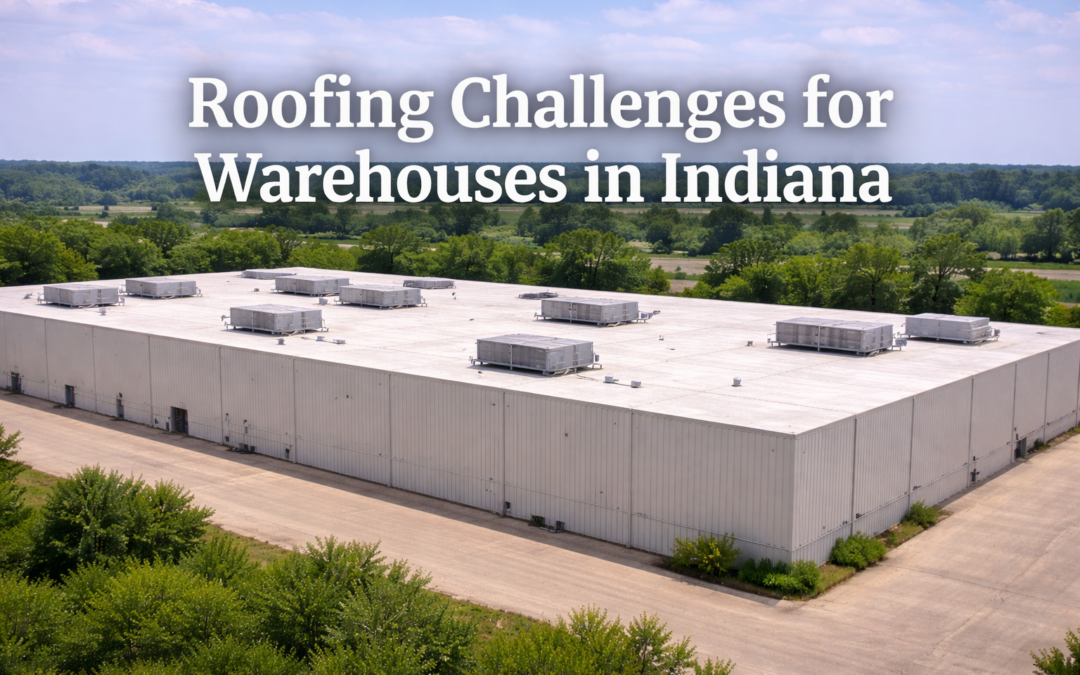
Warehouse roofing systems in Indiana face unique structural and environmental pressures that differ from retail, restaurant, or office buildings.
Large surface areas, minimal slope, heavy rooftop equipment, and exposure to seasonal weather extremes create specific performance challenges.
Understanding these risks helps warehouse owners in Lafayette and throughout Indiana protect long-term structural integrity and operational continuity.
Why Warehouse Roofs Require Specialized Planning
Warehouses typically have:
Large open-span roof structures
Low-slope or flat roofing systems
Extensive HVAC systems
Minimal interior support columns
High square footage
Because of their size, even minor roofing issues can escalate quickly.
1. Ponding Water on Large Roof Surfaces
Flat warehouse roofs often cover tens of thousands of square feet.
If drainage is not properly designed or maintained:
Water accumulates in low spots
Insulation compresses
Structural sagging increases
Seams experience prolonged stress
In Indiana’s freeze-thaw climate, standing water becomes more dangerous as expansion weakens membrane systems.
Routine inspection is critical for early correction.
2. Structural Deflection Under Snow Loads
Indiana winters can produce significant snow accumulation.
Large-span warehouse roofs may experience:
Gradual deflection
Load stress on the decking
Formation of new low areas
Even high-quality membrane systems sourced through manufacturers such as Malarkey Commercial Roofing rely on structural stability beneath them.
Structural movement can compromise drainage efficiency over time.
3. Thermal Expansion and Contraction
Indiana’s seasonal temperature shifts cause roofing materials to expand and contract.
On large warehouse roofs:
Membrane seams experience stress
Flashing around parapet walls can loosen
Fasteners may fatigue
Heat-welded systems, such as TPO or PVC, often perform well when installed correctly, but inspection ensures the seam integrity remains intact.
4. Rooftop Equipment and Foot Traffic
Warehouses commonly contain:
Multiple HVAC units
Ventilation systems
Skylights
Electrical conduit
Service walkways
Frequent technician access increases risk of:
Membrane punctures
Seam damage
Equipment support failure
Walkway pads and proper detailing reduce long-term risk.
5. Drainage Blockage and Debris
Warehouse roofs often accumulate:
Dust and sediment
Packaging debris
Leaves
Wind-driven material
Blocked drains contribute directly to ponding water and added structural load.
Drain cleaning before heavy rainfall seasons is essential in Lafayette and surrounding Indiana communities.
6. Insulation Saturation
Large roof areas make moisture infiltration harder to detect.
Signs of insulation saturation include:
Soft areas underfoot
Increased energy costs
Interior ceiling staining
Bubbling or blistering membrane sections
Wet insulation reduces thermal efficiency and accelerates deterioration.
Best Roofing Systems for Indiana Warehouses
While system selection depends on building design, common options include:
TPO Roofing
Reflective surface reduces heat absorption
Strong seam performance when heat-welded
Common for large industrial buildings
EPDM Roofing
Excellent flexibility during freeze-thaw cycles
Durable under winter stress
PVC Roofing
Strong seam integrity
Suitable for facilities with chemical exposure
Material quality matters, but installation and drainage design ultimately determine performance.
Preventive Maintenance for Indiana Warehouses
Warehouse owners should schedule:
Semi-annual inspections
Drain cleaning before winter and spring
Post-storm evaluations
Structural load assessments after heavy snowfall
Proactive maintenance significantly extends roof lifespan.
When to Schedule a Professional Evaluation
Immediate evaluation is recommended if:
Water remains longer than 48 hours
Snow accumulation appears uneven
Seams are separating
Interior leaks occur
The roof is 15+ years old
Large roofs amplify small problems.
Warehouse Roofing in Lafayette, Indiana
Lafayette’s industrial and logistics facilities face:
Seasonal rainfall
Snow loads
Temperature fluctuations
Wind-driven storms
Warehouse roofing systems must account for both structural scale and environmental exposure.
Professional evaluation helps protect inventory, operations, and long-term structural integrity.
Frequently Asked Questions
How long do warehouse roofs last in Indiana?
Most commercial warehouse roofs last 20–30 years depending on material and maintenance.
What is the biggest risk for warehouse roofs?
Ponding water and structural deflection are among the most common risks.
Are warehouse roofs more expensive to repair?
Because of their size, repair costs can escalate quickly if problems are not identified early.
How often should warehouse roofs be inspected?
Twice per year and after major storms.
Final Thought
Warehouse roofs cover large areas and protect high-value inventory and operations. Consistent inspection and maintenance reduce long-term structural risk and prevent costly emergency repairs.
Protect Your Warehouse Roof Before Small Issues Become Major Repairs
Large warehouse roofs amplify drainage problems, seam stress, and structural movement. Routine inspection helps identify ponding water, insulation saturation, and membrane wear before they impact operations or inventory.
Call (765) 838-0882 to schedule a professional evaluation.