
Flat Roof Repair vs. Replacement: What Lafayette Businesses Should Know
Evaluating Repair vs. Replacement for Your Commercial Roof
Commercial flat roofs are built for performance, but no roofing system lasts forever. For business owners in Lafayette and across the Wabash Valley, deciding between repairing a flat roof or replacing it entirely can feel like a major financial and operational decision.
Understanding the difference and knowing when each option makes sense can help you protect your building, avoid repeat costs, and plan responsibly for the future. If you’re unsure where your roof stands, a professional evaluation from an experienced commercial roofing team can clarify your next step and prevent small problems from turning into major disruptions.
Understanding Commercial Flat & Low-Slope Roofing Systems
Most commercial properties in Lafayette use flat or low-slope roofing systems. These commonly include:
TPO (Thermoplastic Polyolefin)
EPDM (Rubber membrane roofing)
PVC roofing
Modified bitumen systems
Roof coatings over existing membranes
Each system has its own lifespan, repair characteristics, and failure patterns. A 10-year-old TPO roof with a seam issue is very different from a 22-year-old EPDM roof with saturated insulation underneath.
The weather also plays a role. Indiana’s freeze-thaw cycles, spring storms, and heavy rainfall can accelerate wear over time.
When Commercial Flat Roof Repair Makes Sense
In many cases, repair is the smarter and more cost-effective solution.
Flat roof repair may be appropriate when:
Leaks are isolated to a small area
Seam separation is minor
Flashing around rooftop units is damaged
Ponding water is limited
The roof is under 10 to 15 years old
Insulation beneath the membrane remains dry
A targeted repair can extend the life of a commercial roof for several years when the overall system remains structurally sound.
For example, a warehouse with a small membrane puncture from rooftop equipment servicing does not need full replacement. A properly executed repair can restore performance without interrupting operations.
Not Sure Which Option Makes Sense for Your Roof?
Every commercial roof is different. A professional inspection can help you understand whether repair will extend its life or if replacement is the more cost-effective long-term solution.
When Roof Replacement Is the Smarter Investment
There comes a point when ongoing repairs become more expensive than starting fresh.
Commercial roof replacement may be the better long-term choice if:
Repairs are happening repeatedly in different areas
The membrane shows widespread cracking or deterioration
Insulation beneath the surface is saturated
Structural decking has been compromised
The roof is approaching the end of its expected lifespan (15 to 25 years, depending on the system)
Energy efficiency has declined significantly
Replacement often reduces long-term maintenance costs, improves energy performance, and eliminates chronic leak concerns.
For many Lafayette businesses, especially those planning to stay in their building long term, replacement can be the more predictable financial decision.
Cost Considerations for Lafayette Businesses
There is no single price for repair or replacement. Costs depend on:
Total roof square footage
Roof access and height
Type of membrane system
Condition of decking and insulation
Building code requirements
Number of rooftop penetrations and equipment
A restaurant with multiple HVAC units will differ from a large-span warehouse. A school facility may have different budget constraints than a retail center.
Rather than focusing only on immediate expense, it is important to compare:
The cost of continued repairs over 3–5 years
The risk of interior damage from recurring leaks
Energy efficiency improvements from modern systems
A professional roof inspection provides clarity before making a financial commitment.
How Building Type Impacts the Decision
Not all commercial buildings experience roof wear the same way.
Restaurants
Grease exposure, heat discharge from rooftop units, and frequent service access can shorten membrane life. Even small leaks can impact kitchen operations.
Restaurant Flat & Low-Slope Roofing Solutions
Retail Properties
Customer traffic and interior merchandise protection make downtime costly. A roof failure during peak seasons can impact revenue.
Retail Flat & Low-Slope Roofing Solutions
Schools
Budget cycles and student safety matter. Temporary repairs may make sense during planning years before a scheduled capital improvement.
School Flat & Low-Slope Roofing Solutions
Warehouses
Large-span structures require careful assessment. Small leaks can affect stored inventory across wide areas.
Warehouse Flat & Low-Slope Roofing Solutions
Understanding how your building functions helps determine whether short-term repair or long-term replacement makes more sense.
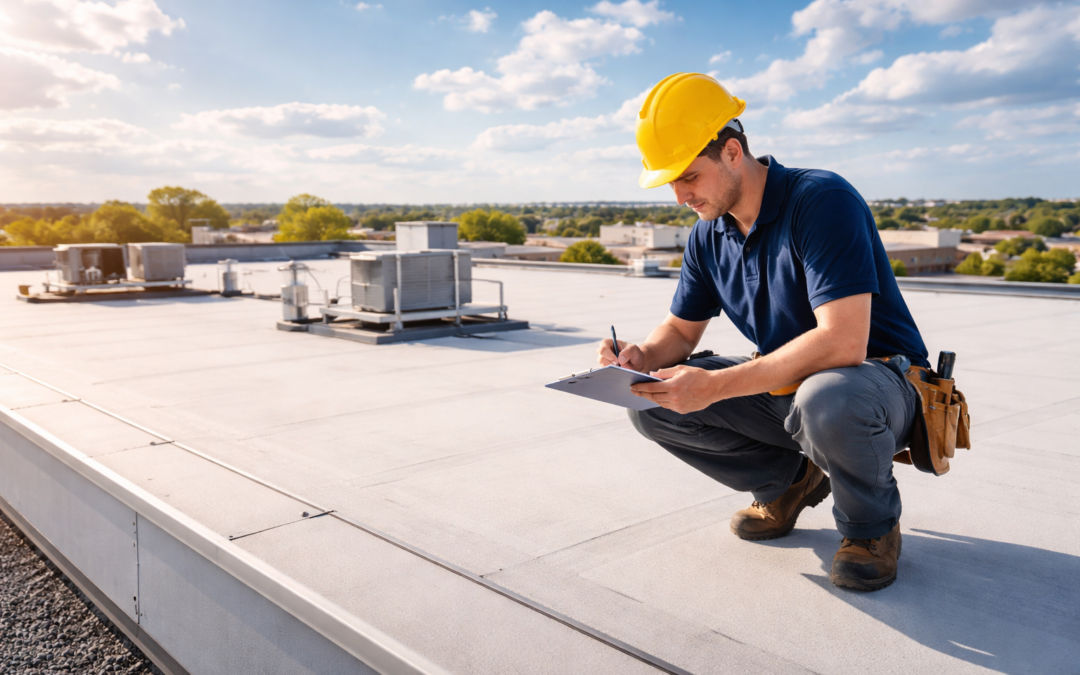
How WV Exteriors Evaluates Commercial Roofs
A proper evaluation includes:
Full membrane inspection
Seam and flashing review
Moisture assessment
Drainage analysis
Structural surface inspection
Photo documentation
The goal is not to push replacement or default to repair. The goal is to determine which solution protects your building most effectively over time.
Clear documentation also helps business owners make informed budgeting decisions.
Frequently Asked Questions
How long does a flat roof repair last?
A properly executed repair can last several years, depending on the roof’s age and overall condition.
How long does a commercial flat roof last in Indiana?
Most systems last 15 to 25 years, depending on material type, maintenance, and weather exposure.
Can you repair part of a flat roof?
Yes. Many flat roof issues are localized and can be repaired without replacing the entire membrane.
Does insurance cover flat roof replacement?
Insurance may cover damage caused by storms or sudden events. Normal wear and tear is typically not covered.
How do I know if my flat roof is failing?
Common signs include recurring leaks, visible membrane cracking, pooling water, rising energy costs, and interior ceiling stains.
Not every commercial flat roof needs to be replaced. Not every leak should be patched again and again. The right choice depends on age, condition, building type, and long-term business plans.
For Lafayette business owners, a professional inspection provides the information needed to decide with confidence. Whether repair or replacement makes sense, acting early prevents small problems from becoming operational disruptions.
If you would like a professional evaluation of your commercial roof, schedule an inspection and get a clear recommendation based on your building’s actual condition.
Plan Before Problems Escalate
A small issue today can become an operational disruption tomorrow. A proactive roof assessment helps protect your building, inventory, and daily operations.