
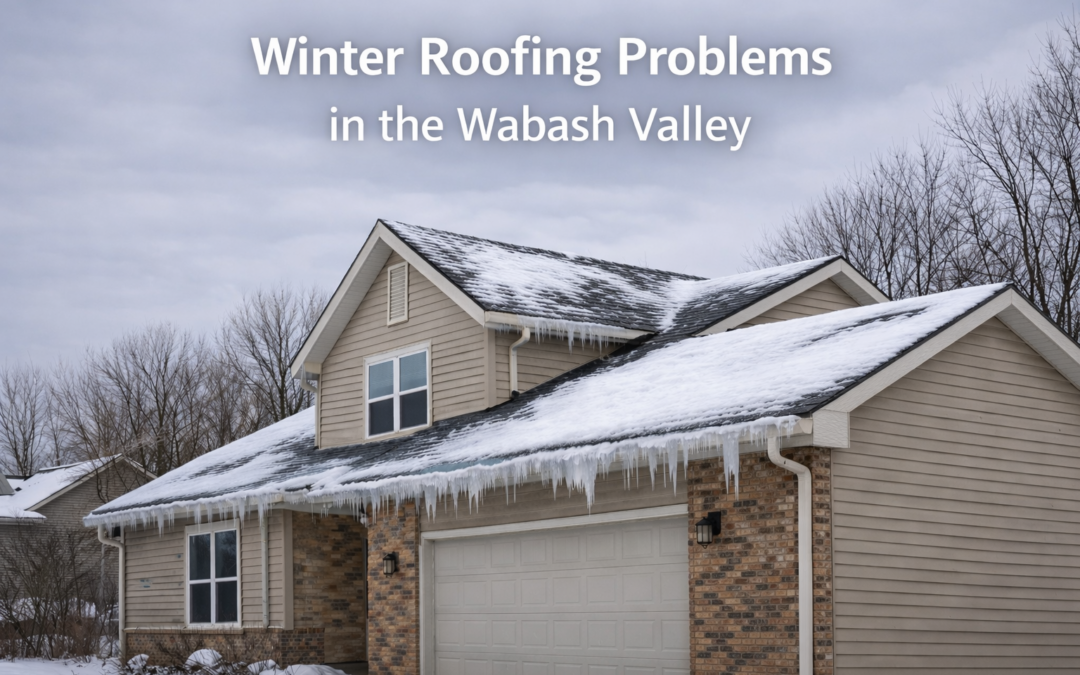
Winter Roofing Problems in the Wabash Valley: What Central Indiana Homeowners Should Watch For
Residential Roofing
Winter weather in Central Indiana can cause roofing problems such as ice buildup, hidden leaks, gutter issues, wind damage, and stress from heavy snow. Freeze-thaw cycles common in the Wabash Valley increase the risk of moisture intrusion and roof deterioration. Regular inspections and early repairs help homeowners reduce long-term damage during and after winter.
Winter in the Wabash Valley brings more than cold temperatures. Snow, freezing rain, wind, and frequent temperature swings all place added stress on residential roofing systems throughout Central Indiana. Many winter-related roof issues develop quietly, making them easy to miss until damage becomes more serious.
This guide outlines the most common winter roofing problems homeowners in the region face, why they occur, and when professional attention may be needed.
How Winter Weather in the Wabash Valley Affects Roofs
Homes throughout the Wabash Valley experience repeated freeze-thaw cycles during winter, especially in areas such as Lafayette, West Lafayette, Terre Haute, and nearby communities. These constant temperature changes cause roofing materials to expand and contract, increasing wear over time. Older homes and properties with limited attic insulation or ventilation are often more vulnerable to winter-related roof issues.
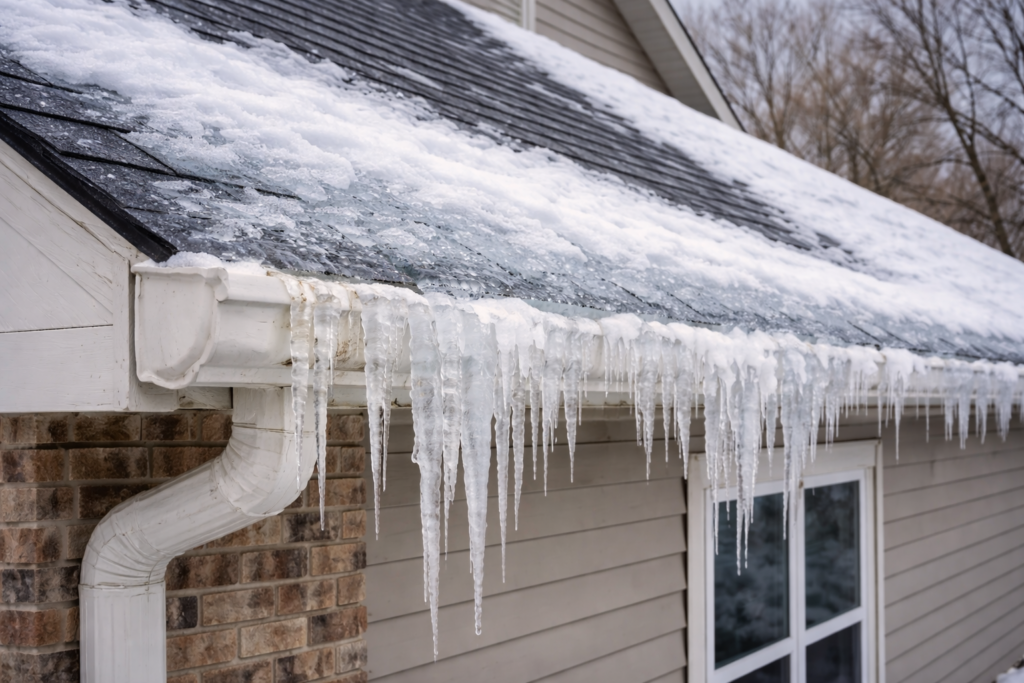
Ice Buildup Along Roof Edges
Ice frequently forms along roof edges and inside gutters after snow melts and refreezes. This usually happens when warmer air from inside the home causes snow to melt higher on the roof while colder edges remain frozen.
Why this matters:
Ice buildup can block proper drainage and force water back under shingles. Even after the ice melts, moisture may remain inside the roofing system, leading to hidden damage that worsens over time.
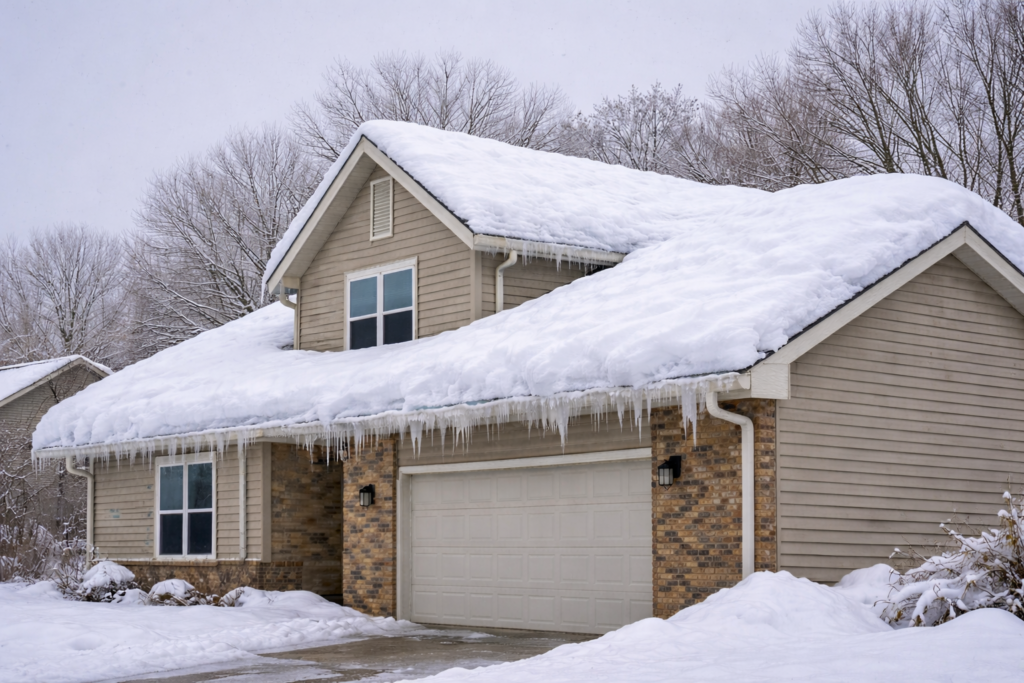
Heavy Snow and Roof Load Stress
Snowfall in Central Indiana is often wet and heavy. Prolonged snow accumulation adds weight to roofing systems, particularly on older roofs or those already showing signs of wear.
Why this matters:
Excess weight can strain roof decking and structural components. In some cases, sagging or weakened areas develop slowly and may not be obvious from the ground.
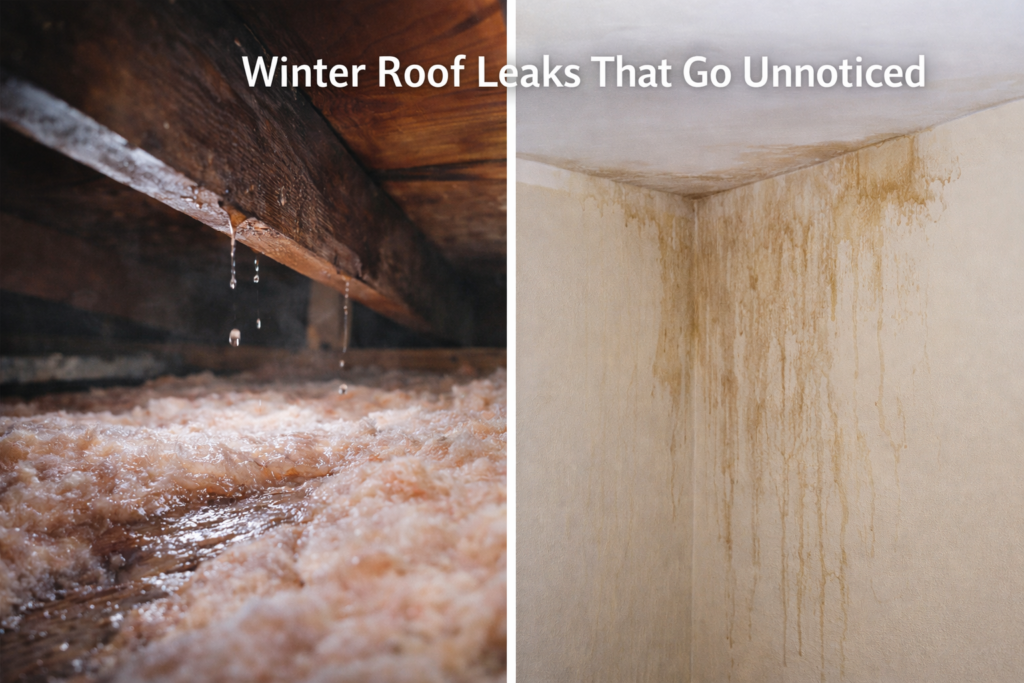
Winter Roof Leaks That Go Unnoticed
Not all roof leaks appear as visible dripping water during winter. Snow and ice can temporarily block water flow, preventing clear signs from showing inside the home.
Why this matters:
Moisture trapped in insulation or attic spaces can lead to wood deterioration and mold growth. By the time stains appear on ceilings or walls, repairs may be more extensive than if the issue had been identified earlier.
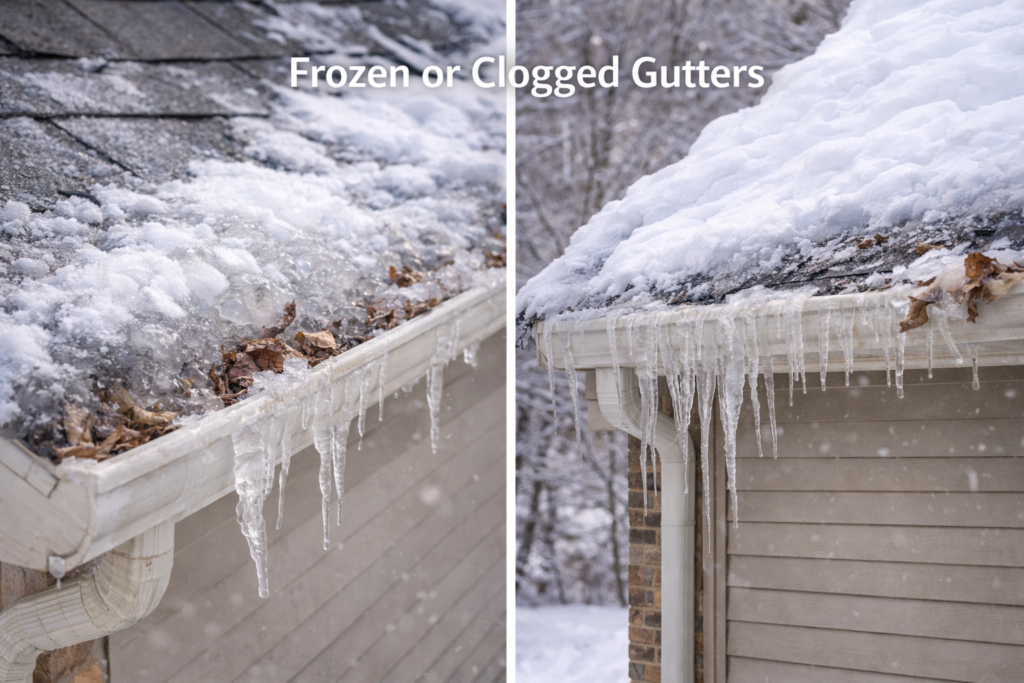
Frozen or Clogged Gutters
Gutters often freeze during winter when snow, ice, or leftover debris prevents proper drainage. Freeze-thaw cycles make this problem worse.
Why this matters:
When gutters cannot drain, water may back up under shingles or overflow onto fascia boards and siding. Over time, this can contribute to rot and additional roof edge damage.
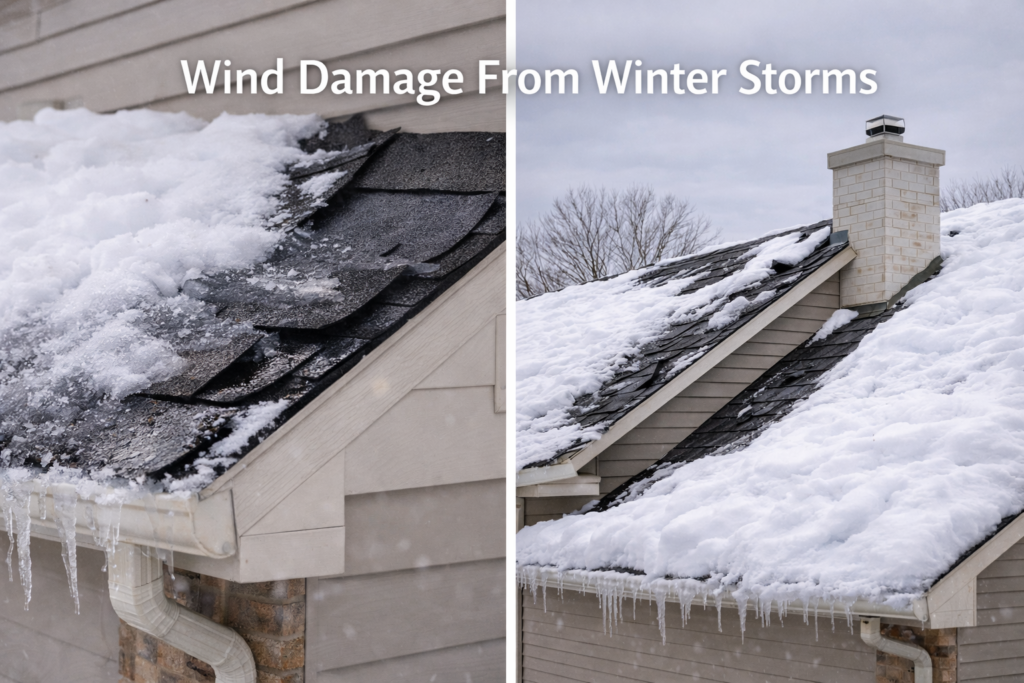
Wind Damage From Winter Storms
Winter storms in the Wabash Valley frequently bring strong winds that can loosen shingles, lift flashing, or expose vulnerable areas of the roof.
Why this matters:
Wind damage is easy to miss, especially when snow covers the roof surface. Small openings created by lifted shingles allow moisture to enter and worsen with each storm.
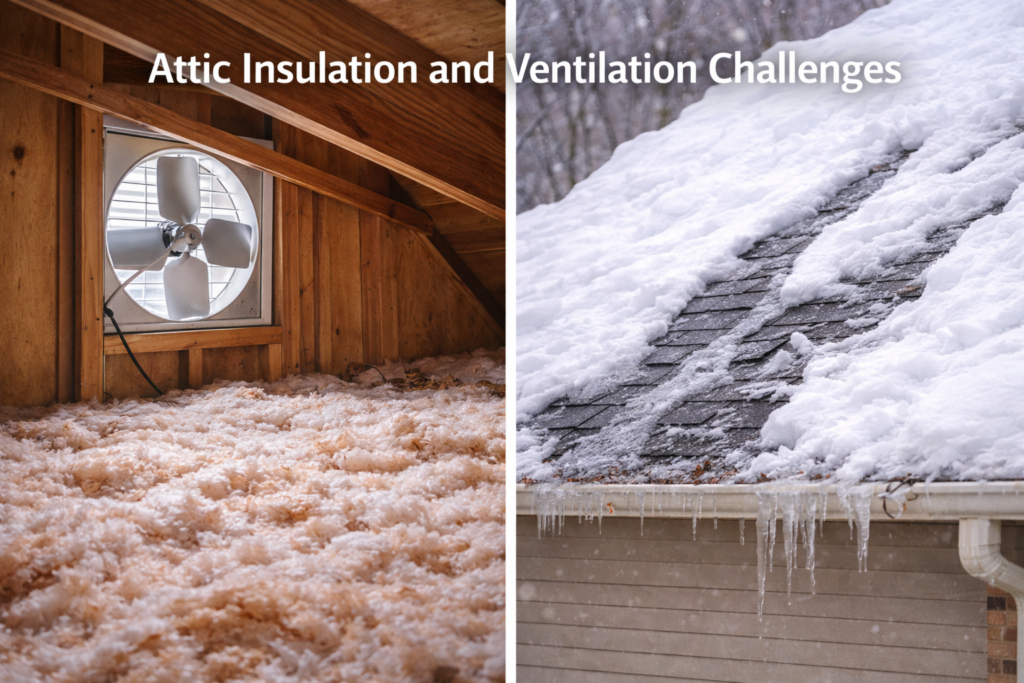
Attic Insulation and Ventilation Challenges
Poor attic insulation or ventilation can cause uneven roof temperatures during winter. Warm spots allow snow to melt unevenly, increasing the likelihood of ice buildup.
Why this matters:
Improper airflow traps moisture in attic spaces and places additional stress on roofing materials, shortening the roof’s overall lifespan.
How Homeowners Can Reduce Winter Roof Damage
While winter roof issues are not always avoidable, homeowners can reduce risk by taking proactive steps:
Schedule professional roof inspections before and after winter
Keep gutters clear to allow proper drainage
Watch for interior signs such as ceiling stains or drafts
Address minor roofing concerns early rather than waiting for spring
Routine maintenance often prevents small issues from turning into costly repairs.
When to Call a Local Roofing Professional
Homeowners should contact a roofing professional if they notice:
Water stains on ceilings or walls
Missing or damaged shingles
Uneven or sagging roof lines
Persistent ice buildup along the roof edges
Winter conditions make roof inspections dangerous without proper equipment and training. A professional evaluation helps identify problems that may not be visible from the ground.
Winter Roofing FAQs for Central Indiana Homeowners
Do winter roof problems get worse in Indiana?
Yes. Snow, ice, wind, and frequent temperature changes, common in Indiana, can accelerate roof wear and moisture intrusion.
Can roof leaks start in winter without visible water?
Yes. Snow and ice can temporarily block water paths, allowing moisture to collect without obvious signs until warmer weather.
Is ice buildup on the roof a sign of damage?
Ice buildup often indicates insulation or ventilation issues and can increase the risk of water entering under shingles.
Should I wait until spring for a roof inspection?
If signs of damage appear during winter, an inspection can help prevent more serious issues from developing.
Protecting Your Roof Through the Indiana Winter
Winter roofing problems are common throughout Central Indiana, but early attention makes a meaningful difference. Regular inspections and timely repairs help protect both the roof and the home beneath it.
Wabash Valley Exteriors works with homeowners across the region to identify winter-related roofing concerns and provide practical solutions based on local weather conditions. If you have concerns about your roof after winter storms, a professional inspection can provide clarity and peace of mind.